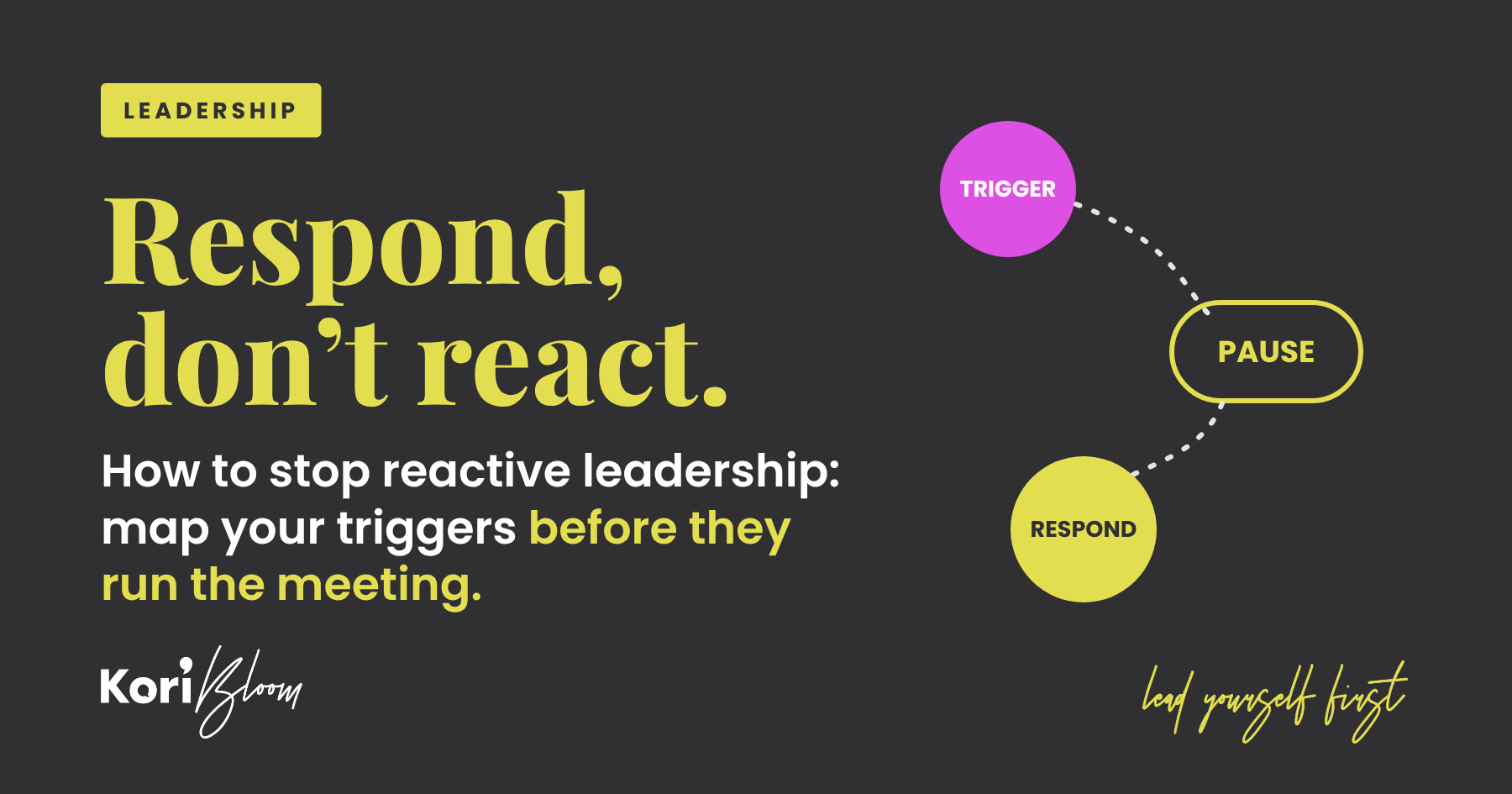

You've been in that meeting. Someone asks a question, pushes back on a decision, or points out something that didn't get done. And before you've even finished hearing them, you're already defending yourself. If you've ever walked out of a moment like that thinking, that's not how I want to lead, this post is for you. Here's how to stop reactive leadership by mapping your triggers before they run the meeting.
Because here's the truth: the trigger isn't the problem. Everyone gets triggered. The problem is what happens in the few seconds after, when emotion makes the decision before you do.
Table of Contents
What Reactive Leadership Actually Looks Like
Reactive leadership is responding from emotion, assumptions, and fear rather than understanding.
We all carry our own tainted views, perspectives, and beliefs. When we bring those assumptions into a conversation, especially a high-pressure one, we often react without accurate or complete information. We answer the question we think we heard instead of the one that was actually asked.
It can look like snapping at a team member in front of others, shutting down a question before it's finished, getting defensive when a decision is challenged, or going quiet and stewing for the rest of the day. If you want a fuller checklist, start with the 7 signs of reactive leadership your team already sees.
What Reactive Leadership Costs Your Team
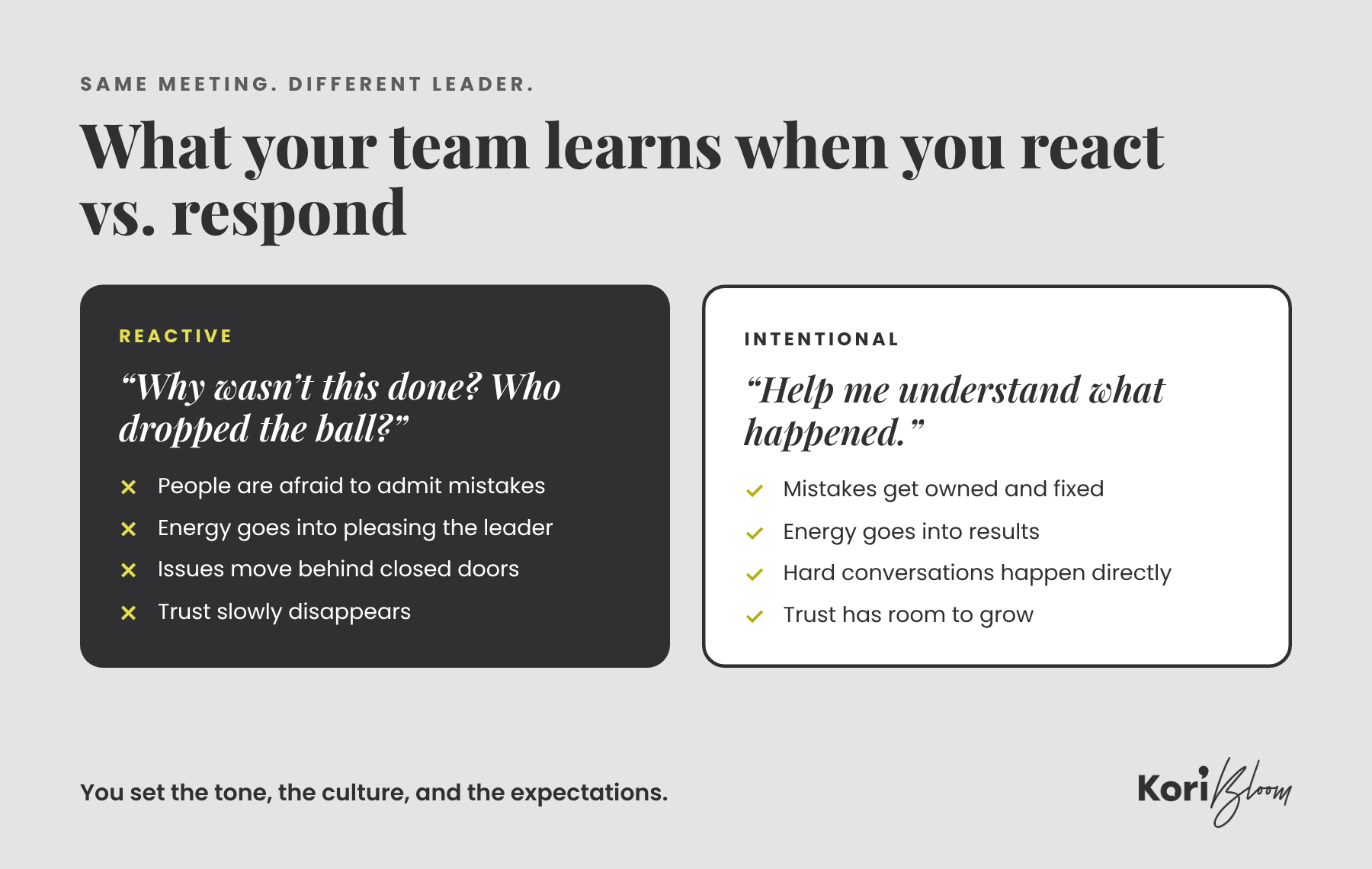
When a leader reacts instead of responds, the team learns fast. Not from what you say, but from what happens when something goes wrong.
Over time, reactive leadership creates:
- A culture that runs on fear. People become afraid to own or admit mistakes.
- A focus on pleasing the leader instead of producing results. Energy goes into avoiding your reaction, not solving the problem.
- Disconnection and negativity. Issues stop getting addressed directly with leadership.
- A breeding ground for gossip. The real conversations happen behind closed doors.
- A lack of trust. And once trust is gone, everything else gets harder.
Researchers call the opposite of this psychological safety: a team where people can speak up, ask questions, and admit mistakes without fear. A reactive leader can't build it, no matter how many team-building days are on the calendar.
The Most Common Triggers for Leaders
Most leadership triggers aren't really about the missed deadline or the pointed question. They're about what that moment seems to say about us. The ones I see most often:
- Taking it personally. A question or piece of feedback feels like an attack.
- Ego. Being challenged, especially in front of others, feels like losing ground.
- Needing to have all the answers. When you don't, you worry people will see you as incompetent or unqualified.
- Old baggage. Sometimes we're triggered by something we're not even consciously aware of, like an unresolved feeling or experience from childhood or our past.
I know these well. In my earlier years as a leader, I definitely took things personally. I often felt like I was being attacked, and instead of seeking understanding, I went straight into defensive mode.
I learned that wasn't productive or helpful. It just made the situation worse.
How to Stop Reactive Leadership: Map Your Triggers in 4 Steps
This is the part I teach in every room, because it works whether you're running a board meeting or standing in your kitchen. Mapping a trigger isn't about never feeling it. It's about creating space between the trigger and your reaction so you can respond with intention and more information.
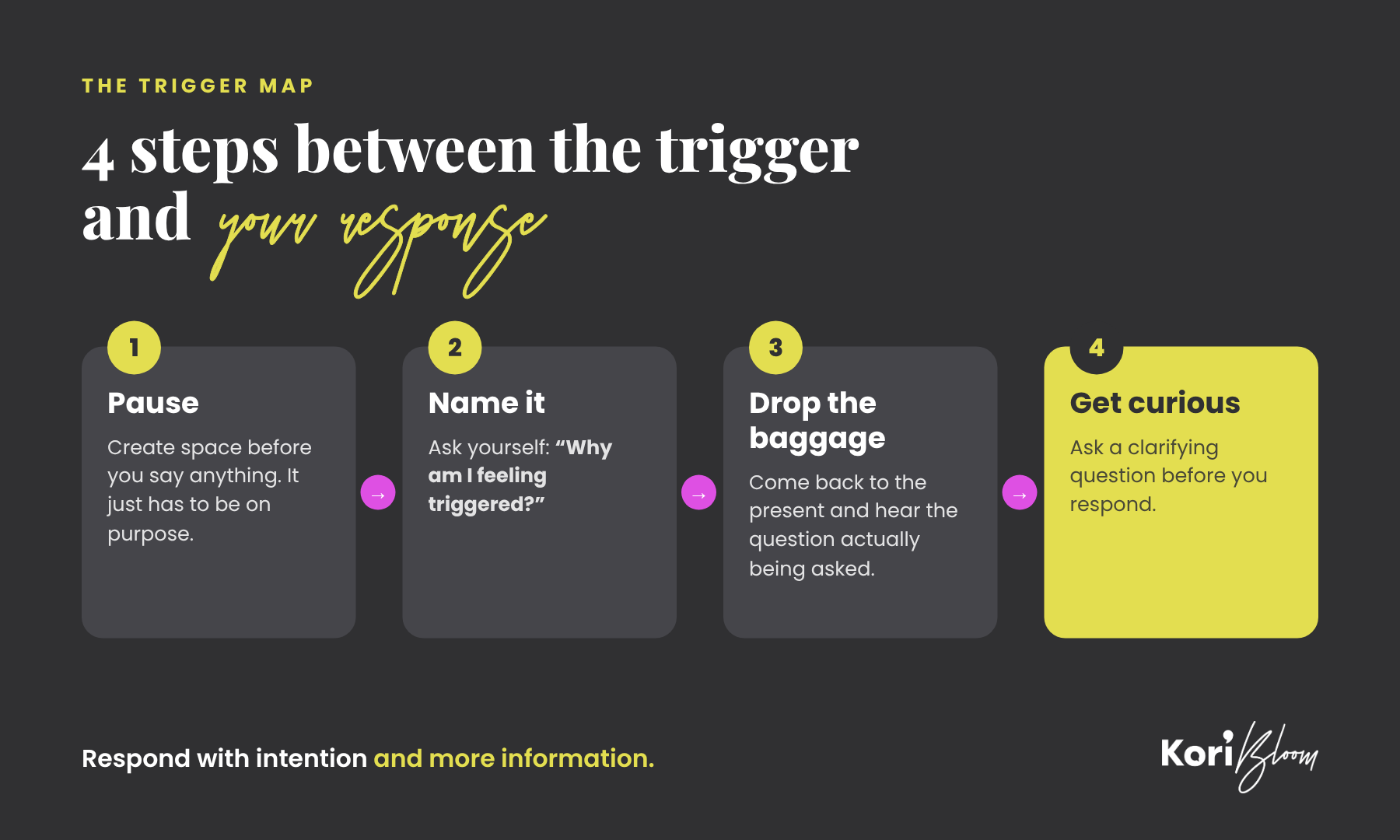
Step 1: Pause
Before anything else, pause. An emotion gets triggered and our natural tendency is to react. The pause is what disrupts that old pattern. It doesn't have to be long. It just has to be on purpose.
Step 2: Ask, “Why am I feeling triggered?”
Notice the trigger and name it. Then give it some breathing room. Maybe the question made you feel like you look incompetent. Maybe the pushback felt like disrespect. Acknowledge that thought instead of acting on it.
Step 3: Drop the Baggage and Hear the Actual Question
Bring yourself back to the present moment. Set down the assumptions, the history, and the story you were already telling yourself. Then actually hear the question being asked, not the one your trigger heard.
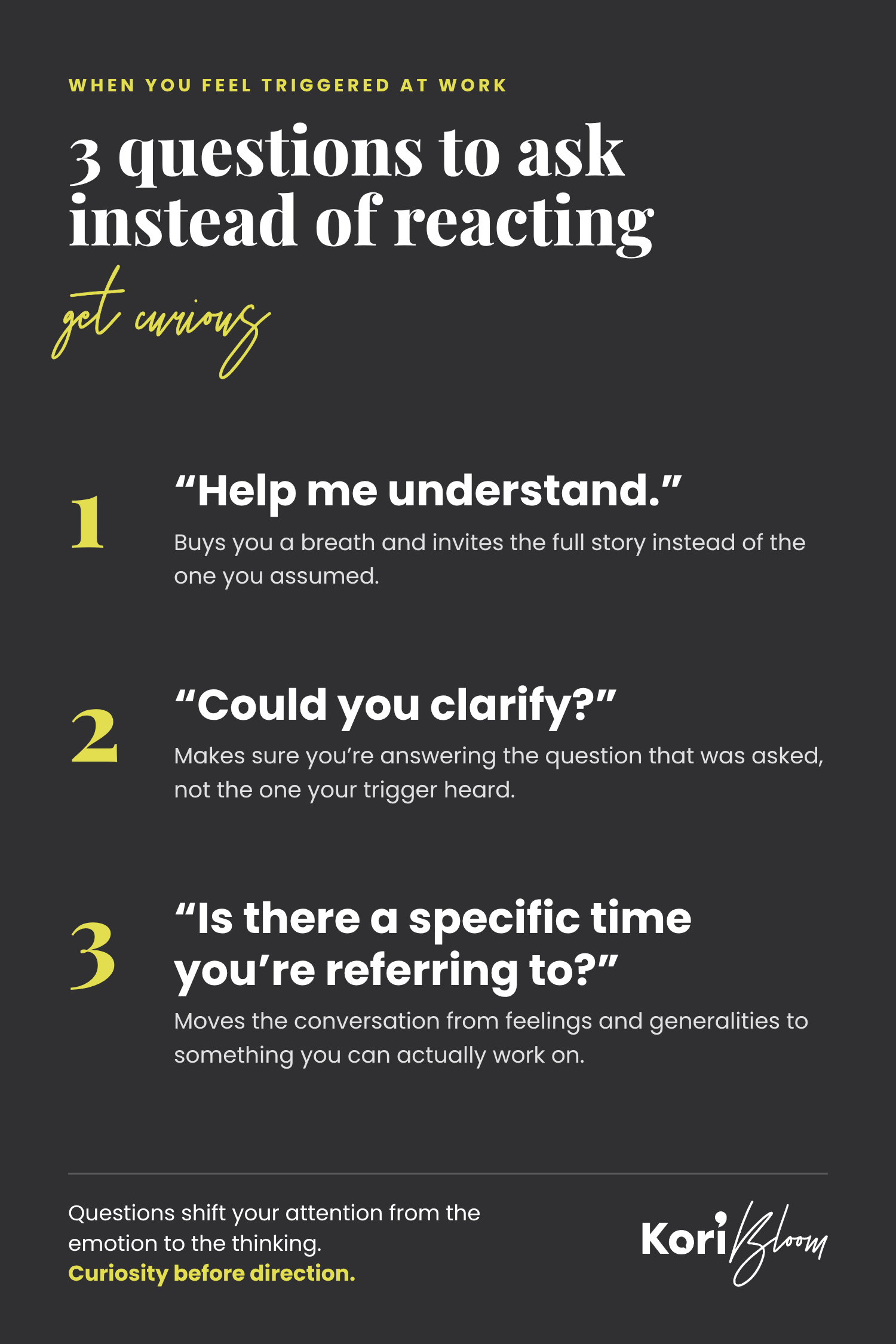
Step 4: Get Curious and Ask a Clarifying Question
Instead of reacting, get curious. Ask any question that helps you better understand the situation:
- “Help me understand.”
- “Could you clarify?”
- “Is there a specific time you're referring to?”
Questions are intentional because they shift your attention away from your emotional reaction and toward more thoughtful thinking. It's literally a brain thing!
Before, During, and After the Tough Meeting
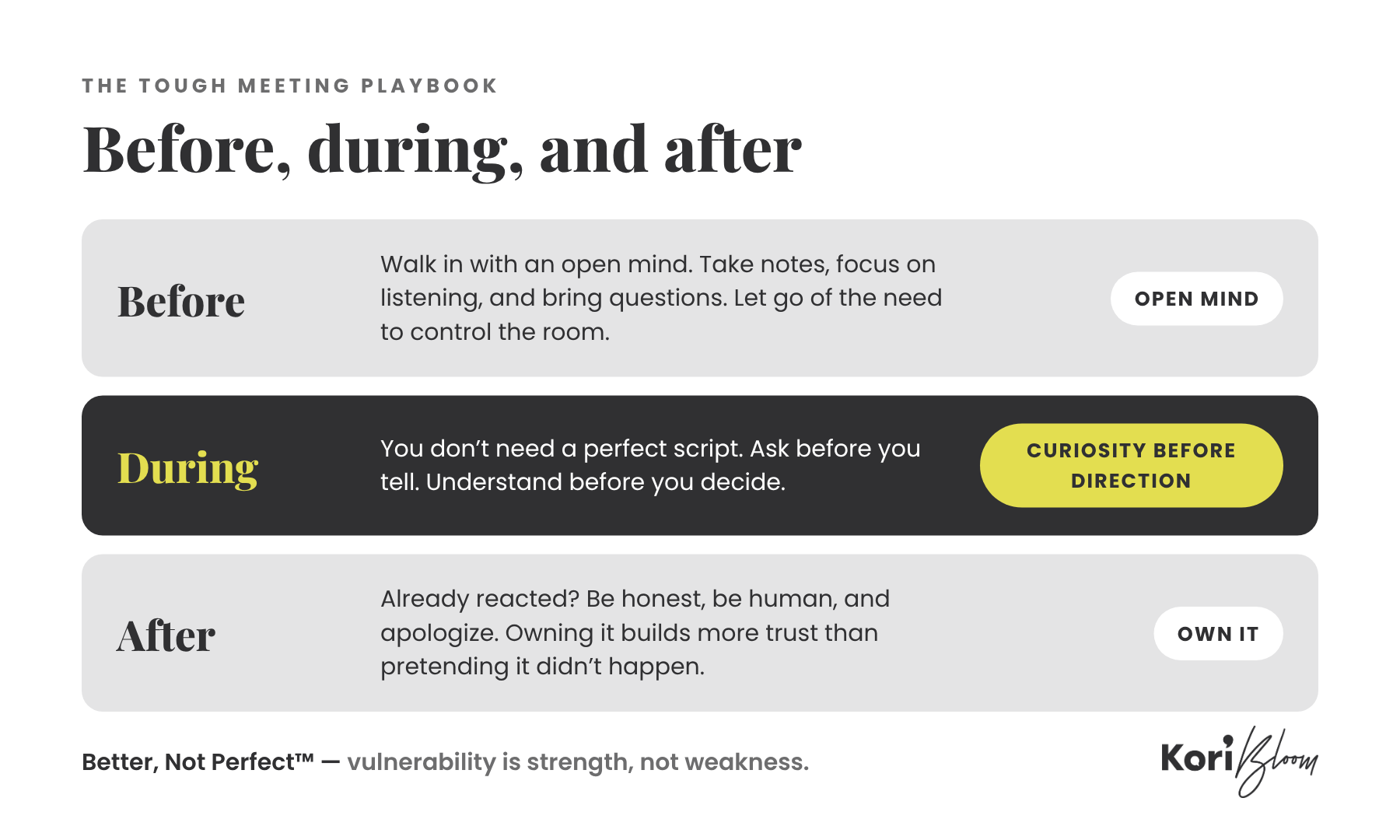
Before: Walk In With an Open Mind
Go in ready to listen. Take notes. Bring questions. Questions are key!
Be flexible and let go of the need to control the meeting. True control is your ability to pivot and practice self-control, which I like to call self-leadership. Remember, your actions speak louder than your words. You are setting the tone, the culture, and the expectations. Leadership has to model the behavior for it to work.
During: Better, Not Perfect™ and Curiosity Before Direction
In the moment, you don't need a perfect script. You need two reminders: Better, Not Perfect™ and Curiosity Before Direction. Ask before you tell. Understand before you decide. Start asking, stop telling.
After: Repair It When You Already Reacted
You're going to miss the pause sometimes. We all do. When it happens, show humility. Be honest, be human, and apologize.
Vulnerability is strength, not weakness. Your team will appreciate your willingness to own your mistakes, and it sets the tone that not everyone or everything has to be perfect. We all make mistakes. The key is owning them.
Lead Yourself First, at Work and at Home
This is where Lead Yourself First™ comes in. The only person you can control is yourself. When you lead yourself first, you stop trying to control the room and start setting the tone for it.
And it's the same lesson I learned as a mom. What you model and how you show up matters more than anything you say. You can't demand respect through blaming, attacking, or yelling, whether you're dealing with a child or an adult. And you probably won't get the full story that way, either.
If we always assume the worst in others, we may never see their best.

One of my favorite moments as a speaker came from a keynote attendee who told me he still had the worksheet from one of my first Better, Not Perfect™ keynotes displayed in his office. He said it reminded him to focus on what matters and that leading himself first is the most important step. He told me this a year after the keynote.
It always makes me tear up when I hear how a few simple words can have such a lasting impact. (And yes, I said worksheet. You can't take the teacher out of me! I believe if it's written, it's real.)
Your One Thing to Try This Week
If you take only one thing from this post, make it this: PAUSE.
Give yourself space between the trigger and your reaction. That space is where you stop reactive leadership, one meeting at a time. Respond, don't react. Your attention is your most valuable currency. Spend it wisely.
Want the words to use in that space? Download The Drama-Free Leader: 6 Scripts to Replace Reactive Communication. And if you'd like to bring this work to your team, explore Kori's leadership keynotes and workshops.
Frequently Asked Questions
What is reactive leadership?
Reactive leadership is responding from emotion, assumptions, and fear rather than understanding. It happens when a leader reacts to what they think they heard, often without accurate or complete information, instead of pausing to understand what's actually happening.
How do you stop reactive leadership?
Start by creating space between the trigger and your reaction. Pause, ask yourself why you're feeling triggered, set down the assumptions you brought in, and get curious with a clarifying question like “Help me understand.”
What are common triggers for leaders?
Common triggers include taking feedback personally, feeling challenged in front of others, believing you need to have all the answers, and old experiences you may not even be aware of that make a moment feel bigger than it is.
How do you repair trust after reacting at work?
Own it quickly. Be honest, be human, and apologize. Showing humility tells your team that mistakes can be admitted and fixed, which builds more trust than pretending it didn't happen.
What is the difference between reacting and responding?
Reacting is automatic and driven by emotion. Responding is intentional: you pause, gather more information, and choose what to say next based on your values instead of the feeling of the moment.