You didn't mean to yell. Again. The words were out — sharp, loud, too much — before you'd even decided to say them, and now there's that familiar wave of guilt while your kid's face crumples. If you've been searching for how to parent without yelling, first, breathe. You are not a bad parent. You're a human one, running on not enough sleep and too many demands, whose stress response is quicker than your best intentions. The good news: yelling is a habit, not a personality — and habits can be rebuilt. This post gives you the why behind the yelling, a three-second tool to catch it, and seven ready-to-use scripts for the exact moments that set you off. Better, not perfect. Let's go.
Table of Contents
Why We Yell (and Why It's Not Because You're a Bad Parent)
Yelling is what happens when big feelings meet an empty tank. When we're overwhelmed, rushed, or feel disrespected, our nervous system grabs the fastest tool it has to regain control — volume. In the moment it feels like our kids caused it. Really, the yell is our own stress talking.
Here's the reframe that changes everything: the goal isn't to become a parent who never feels angry. Anger is information. The goal is to put a little space between feeling it and acting on it — so the anger doesn't come out as a yell your child absorbs. One raised voice won't harm your kid; you're human. But when yelling becomes the daily default, it wears on everyone. Learning how to parent without yelling isn't about swallowing your feelings. It's about having a better move ready than the one your stress reaches for first.
The 3-Second Pause: What to Do Right Before You Yell
Every yell has a tiny window right before it — the split second where your chest tightens and the words load up. That window is where the whole thing is won or lost. It's the same idea I teach leaders with my Trigger-to-Response Map: you can't choose a better response until you notice the trigger.
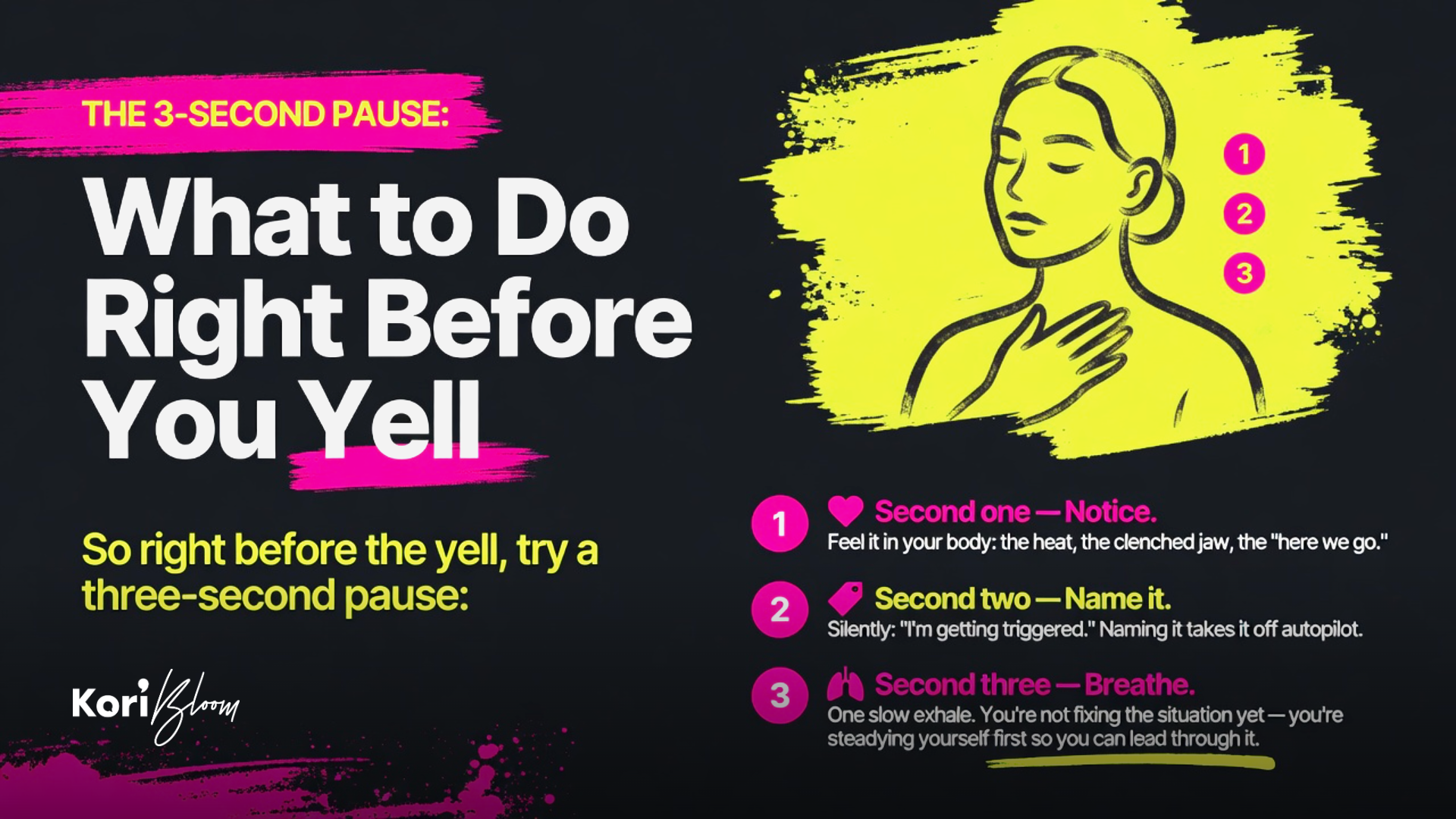
So right before the yell, try a three-second pause:
- Second one — Notice. Feel it in your body: the heat, the clenched jaw, the "here we go."
- Second two — Name it. Silently: "I'm getting triggered." Naming it takes it off autopilot.
- Second three — Breathe. One slow exhale. You're not fixing the situation yet — you're steadying yourself first so you can lead through it.
Three seconds won't feel like enough when you're heated. It is. It's the whole difference between reacting and choosing.
How to Parent Without Yelling: 7 Scripts for the Moments That Set You Off
Here's the part that makes it real. The reason we yell in the heat of the moment is that our brain won't write calm dialogue on the spot — so it grabs the loud, familiar line instead. The fix is to decide your words before you need them. Here are seven scripts for the triggers that get parents most, each one replacing the yell it usually becomes:
- When they won't listen. Instead of "How many times do I have to tell you?!" → "I notice you haven’t started yet. What’s getting in the way?"
- When they're melting down. Instead of "Stop crying!" → "I see you’re having a hard time. I’m right here."
- When you feel disrespected. Instead of "Don't talk to me like that!" → "You can be upset. You still need to speak respectfully."
- When everyone's rushing. Instead of "Hurry up, we're going to be late!" → "We leave in five minutes. What needs your attention right now?"
- When one hurts the other. Instead of yelling across the room → "Stop. Hands off. I can see you’re upset, but we can’t hurt people. Tell me what happened."
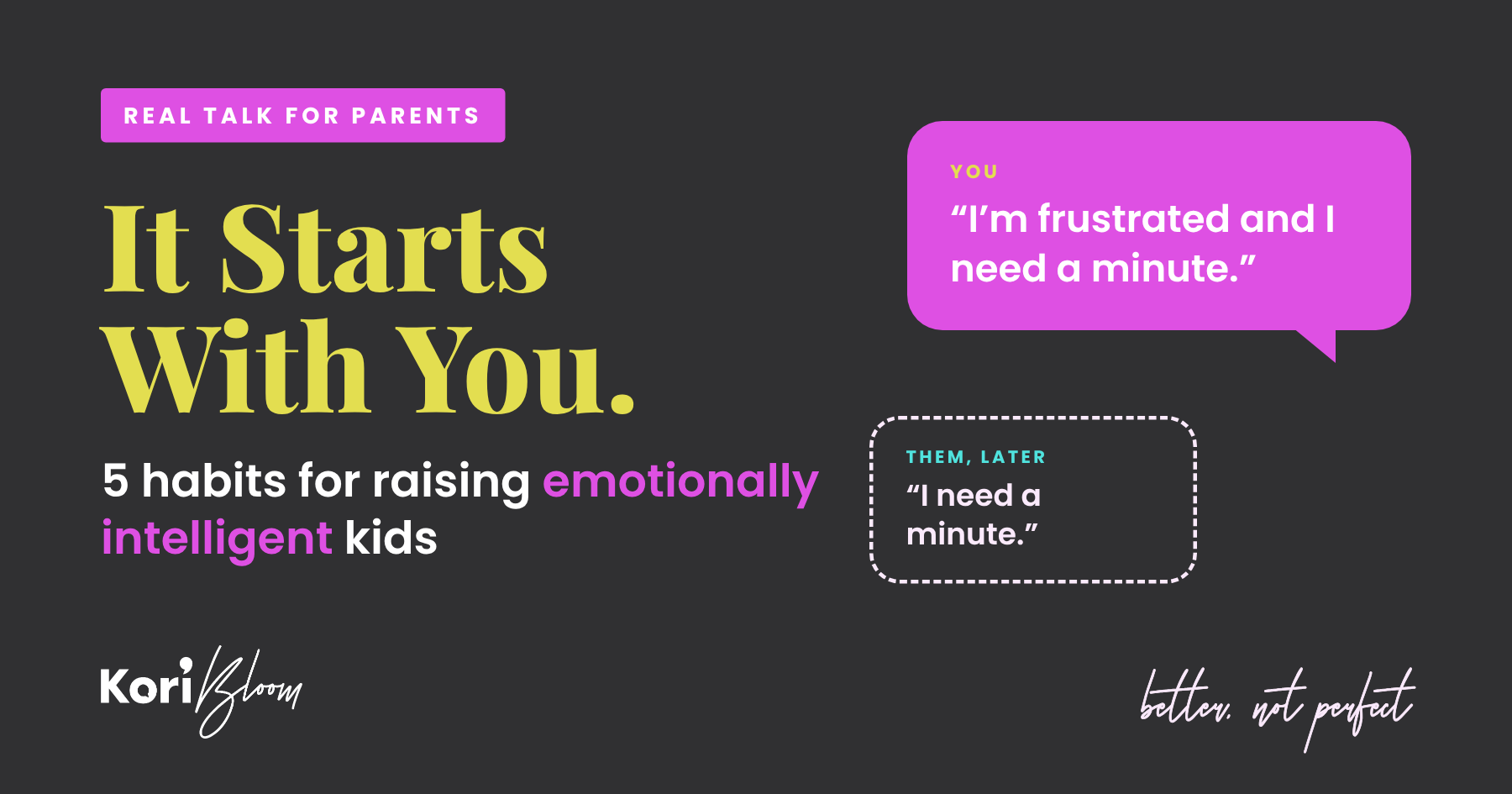
- When you feel your own fuse. Instead of exploding → "I am feeling frustrated. I need a minute."
- When they say "I hate you." Instead of matching their heat → "I hear that you’re really upset, and that’s okay. But the answer is still no."
Notice what these scripts share: they stay warm and stay firm. You're not going soft or giving in. You're trading the yell for words that hold the boundary and the connection at the same time.
Get the 7 Scripts to Say Instead of Yelling
Drop your email and I'll send you the free one-page cheat sheet — 7 ready-to-use scripts for the exact moments that set you off, so you've got calm words ready before the next hard moment hits. Better, not perfect.
No spam, ever — just real tools and the occasional note from Kori. Unsubscribe anytime.
You're in!
Your 7 scripts are ready — grab the PDF below and keep it where the hard moments happen.
Download the ScriptsWhen You Yell Anyway: The Repair That Matters More Than the Slip
How can I be a better parent without yelling? You're going to yell sometimes. I do. Better, not perfect — remember? What your kids need isn't a parent who never messes up; it's a parent who shows them what to do after a mistake. That's repair.
Repair is simple and powerful: "I raised my voice, and that wasn't fair to you. I was frustrated, but it's my job to handle that without yelling. Let's try again." No groveling, no long lecture — just ownership and a reset.
Here's what repair teaches, every single time you do it: that relationships can bend without breaking, that big feelings are survivable, and that saying sorry is a strength, not a weakness. The parent who repairs actually raises kids who yell less — because you modeled the exact skill you're trying to build. Yelling is really just one face of reactivity, and if you want the deeper framework underneath all of it, here's how to stop reactive parenting for good.
You Can Learn to Parent Without Yelling — One Moment at a Time
Learning how to parent without yelling doesn't happen in a day, and it doesn't happen perfectly. It happens one triggered moment at a time — one pause you catch, one script you reach for, one repair when you miss. Every rep counts, even the late ones.
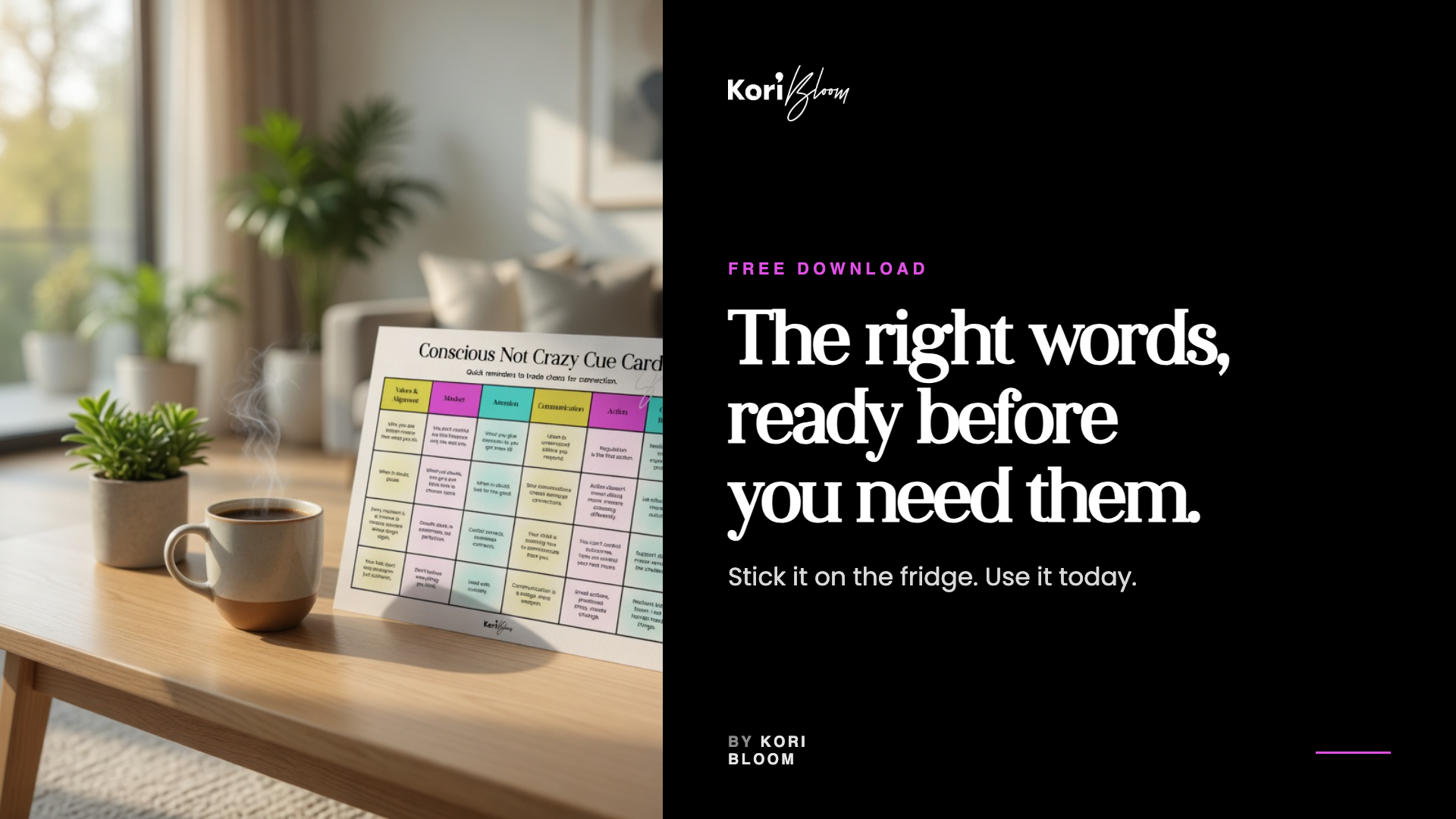
Start small: pick just one of the seven scripts above — the one for the trigger that gets you most — and say it out loud tonight while things are calm. Then keep it close. Download the free Conscious Not Crazy Cue Cards so your calm words are ready before the next hard moment hits. You don't have to be a calm person to become a calmer parent. You just have to keep showing up. You've got this.
Frequently Asked Questions
How do I parent without yelling when I'm already angry?
Start with a three-second pause: notice the anger in your body, name it silently, and take one slow breath before you speak. You're not ignoring the anger — you're steadying yourself so it doesn't come out as a yell. Then reach for a pre-decided script.
Is it bad to yell at your kids?
An occasional raised voice won't harm your child — every parent slips. What matters is the pattern. When yelling becomes the daily default it wears on everyone, so the goal is to make calm your norm and repair the times you miss.
What can say instead of yelling?
Trade the reactive line for one that's warm and firm: "You're upset. I'm right here," or "That tone doesn't work for me — try again and I'm listening." Deciding your words before you need them is the single best way to stop yelling in the moment.
How do I stop yelling at my kids for good?
Think practice, not perfection. Catch your trigger, pause, use a script, and repair when you slip. Keep your go-to lines somewhere visible. Over a few weeks of reps, the pause gets longer and the yelling gets rarer.