

I know this may be one of the most controversial things I've ever written. That's okay.
My goal isn't to offend anyone. It isn't to judge anyone's personal choices. And it certainly isn't to tell adults how they should live their lives.
My heart is, and always will be, with children.
As a parent, educator, and someone who has spent years studying child development and human behavior, I keep coming back to a question I think more people are quietly wondering but are afraid to say out loud: What if we're asking children questions they're not yet developmentally ready to answer? For me, letting kids be kids starts with exactly that kind of humility.
Table of Contents
We Recognize Children Are Still Growing — in Almost Every Area of Life
We already accept that children are still developing in nearly every other part of life. They have to reach a certain age before they can drive on their own. They can’t vote until they’re adults. They can’t legally purchase alcohol. They can’t legally gamble as minors.
Many rental car companies charge higher fees or won't rent to drivers under 25 at all, because younger drivers are statistically at higher risk.
Research shows the same thing about the brain. The areas responsible for planning, judgment, and impulse control continue developing well into young adulthood. That doesn't mean young people are incapable of thoughtful decisions. It simply reminds us that adolescence is a season of growth, exploration, and continued development.

The Question About Identity I Keep Wrestling With
So here's the question I sit with: If we recognize that children are still developing in so many areas of life, shouldn't we approach questions about identity with that same humility, patience, and care?
This isn't about pretending kids don't have real feelings or real questions. It's about honoring how child development and identity actually unfold — gradually, over years, with room to change.
Letting Kids Be Kids Means Letting Them Explore
When I was little, I begged my mom for Superman underwear. Not Superwoman. Superman. I wanted to be Superman because, in my eyes, he was the coolest.
No one thought I wanted to be a boy. No one suggested I might be questioning my identity. I was a child. I was pretending. I was exploring.
Years later, my own son put on his sister's dance outfit and ran around the house. We laughed. Not because we were laughing at him — because kids do funny things.
They play. They experiment. They imitate. That's what childhood is supposed to look like.
Today, I sometimes wonder whether we've become so quick to assign labels that we've forgotten how naturally children explore. Letting kids be kids means giving them permission to try things on — costumes, roles, big feelings — without turning every moment of play into a permanent definition.
Whatever We Focus On Grows: The Influences Shaping Our Kids
Children are influenced by the world around them. They always have been. Every message they consume shapes how they see themselves and the world:
- Parents
- Teachers
- Friends
- Television
- Books
- Social media
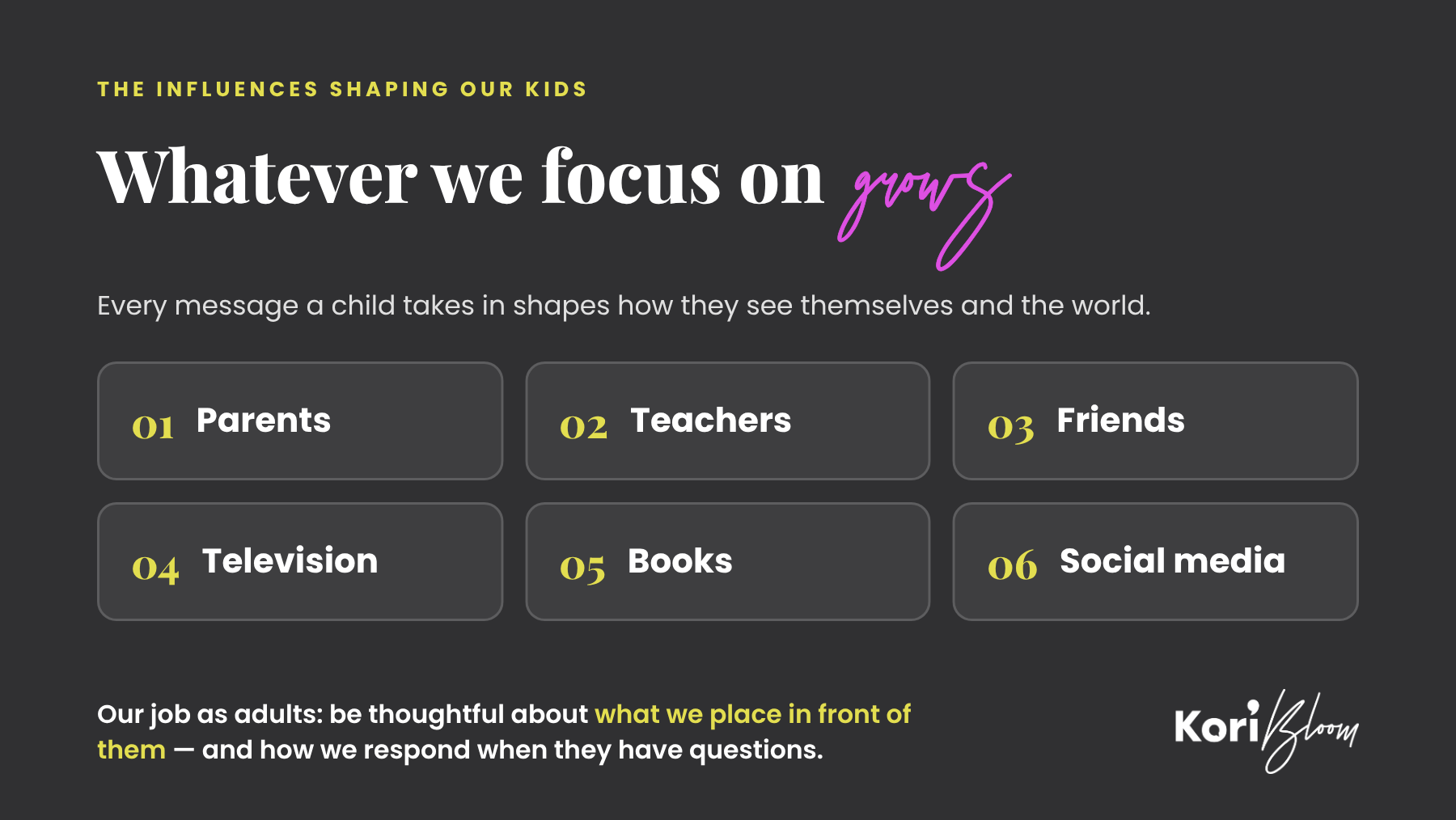
That's one of the reasons I often say: whatever we focus on grows. This isn't about pretending those influences don't exist. It's about recognizing that they do.
And because they do, I believe we have an incredible responsibility as adults to be thoughtful about what we place in front of children — and how we respond when they have questions. This is the heart of what I teach inside Conscious Not Crazy: staying grounded and intentional instead of reactive, especially in the moments that matter most.
Listen Before You Label: A More Intentional Way to Parent
This isn't a call to shame children. Quite the opposite.
Every child deserves to feel deeply loved. Every child deserves to feel safe. And every child deserves adults who listen before they label — adults who ask questions before making assumptions, and who create space for children to grow without pressure to define themselves before they're ready.
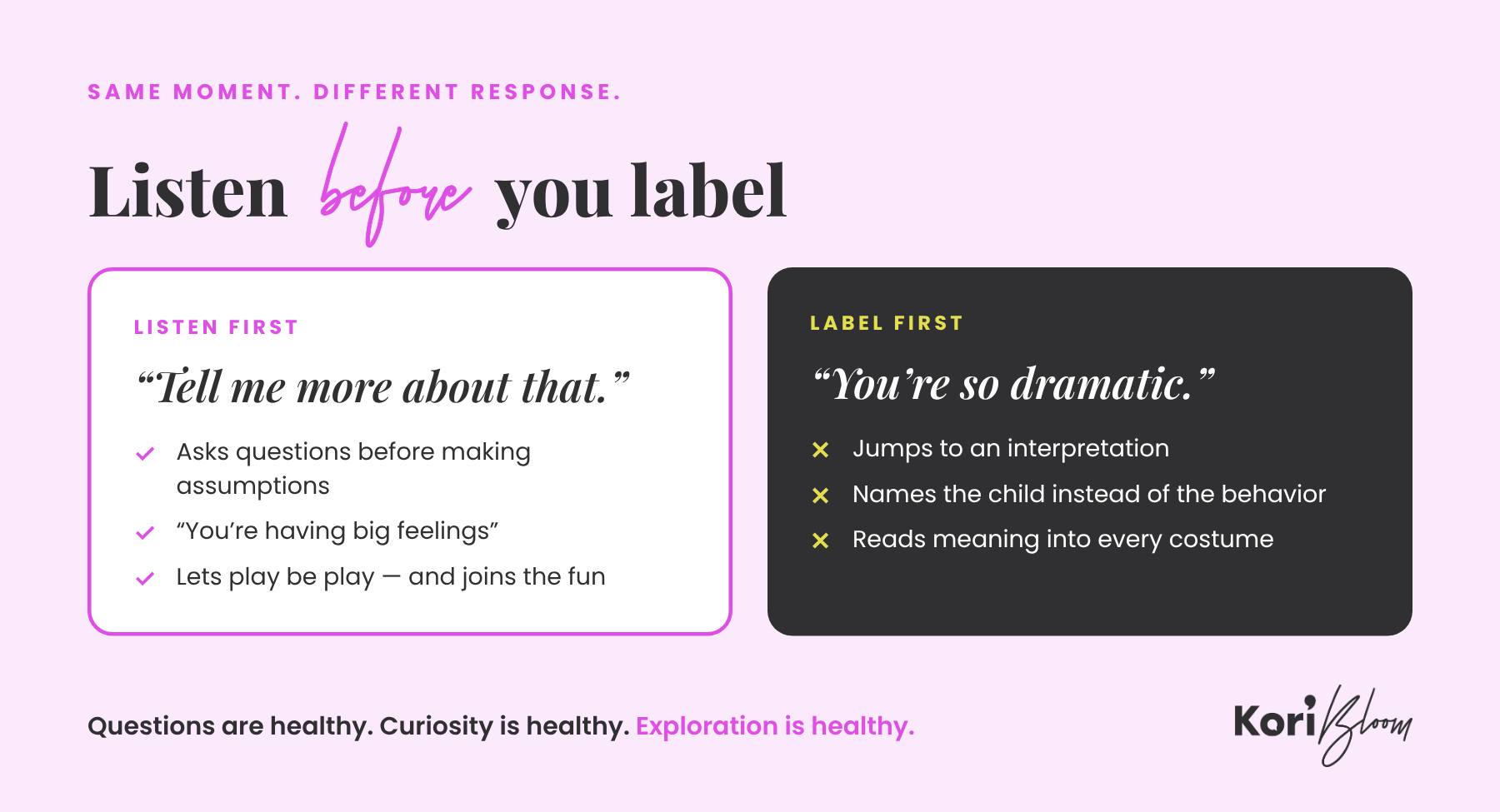
Parenting with intention doesn't mean we fear our kids' questions. My concern was never that children ask questions. Questions are healthy. Curiosity is healthy. Exploration is healthy. My concern is whether, as adults, we're sometimes too quick to provide answers or labels before children have had the chance to simply grow.
What Letting Kids Be Kids Looks Like in Real Life
None of this is abstract. It shows up in small, ordinary moments — at the dinner table, in the car, in the middle of a busy afternoon when your child says or does something that catches you off guard. The question is always the same: will I react, or will I stay conscious and connected?
Here are a few grounded moves you can practice the next time your child surprises you:
- Pause before you respond. A three-second breath keeps you out of reaction and gives you room to choose your words on purpose.
- Get curious instead of certain. Try “Tell me more about that,” instead of jumping to an interpretation or a label.
- Name the behavior, not the child. “You're having big feelings” lands very differently than “You're so dramatic.”
- Let play be play. When your child pretends, imitates, or tries on a new role, join the fun instead of reading meaning into every costume.
- Reassure the relationship. Remind them — in words and in tone — that your love isn't on the line, no matter what they're working through.

These aren't scripts to memorize perfectly. They're small shifts you get to practice, miss, and try again. Better, not perfect. That's how self-leadership works at home, and it's exactly how giving kids time to grow becomes something you do, not just something you believe.
The Gift of Time: Giving Kids Time to Grow
Perhaps the answer isn't rushing children toward an identity. Perhaps it's giving kids time to grow — time to mature, time to explore, time to develop, and time to discover who they are without feeling pressure to fit into any category before they're ready.
At the end of the day, I believe every child deserves to know this: You don't have to change who you are to be worthy of love. You don't have to earn your value. You don't have to become someone else to belong.

Whether you share my perspective or not, I hope we can agree on one thing. Children deserve our patience. They deserve our protection. They deserve our compassion. And they deserve the freedom to grow into the people they were created to become.
Frequently Asked Questions
What does “letting kids be kids” actually mean?
Letting kids be kids means giving children room to play, pretend, and explore without treating every phase or interest as a fixed, permanent label. It's an approach rooted in patience — honoring that childhood is a season of growth, not a finish line.
Isn't it good for children to ask questions about who they are?
Yes. Questions, curiosity, and exploration are all healthy and normal parts of child development and identity. The invitation here isn't to silence questions — it's for adults to listen before they label and to resist rushing to answers before a child has had time to simply grow.
How does this connect to parenting with intention?
Parenting with intention is about staying grounded and curious instead of reactive. Applied here, it means noticing our own urge to define or label a child in the moment, pausing, and choosing patience and connection first. Whatever we focus on grows — so we choose our focus with care.
What can I do when my child explores different roles or interests?
Meet it with curiosity and calm. Let them play and imitate the way children always have, ask open questions instead of assuming, and give them time. If you'd like ready-made scripts for staying steady in those moments, my CNC Cue Cards are built for exactly that.
Give Your Kids the Gift of Time
If this resonated, here's my invitation: the next time your child surprises you with a question or tries on a new role, pause before you label. Listen first. Then give them the one thing they can't get back — time to grow.
Want simple, in-the-moment scripts for staying calm and connected when parenting feels reactive? Grab my free CNC Cue Cards and trade chaos for connection — one grounded response at a time. Because we're all after better, not perfect.