
If you’ve been parenting for more than ten minutes, you’ve probably caught yourself thinking some version of: I just want them to handle their emotions better. Cool. Same. But here’s the catch, and it’s a big one: emotional intelligence in kids is not something you teach them in a curriculum. It’s something they catch from you.
In a recent Conscious Not Crazy episode, I unpacked what raising emotionally intelligent kids actually looks like — not as a parenting theory, but as a small set of daily habits that change the climate inside your house. Here are five of them. Each one starts with you. All five are practical. None require a chart on the wall.
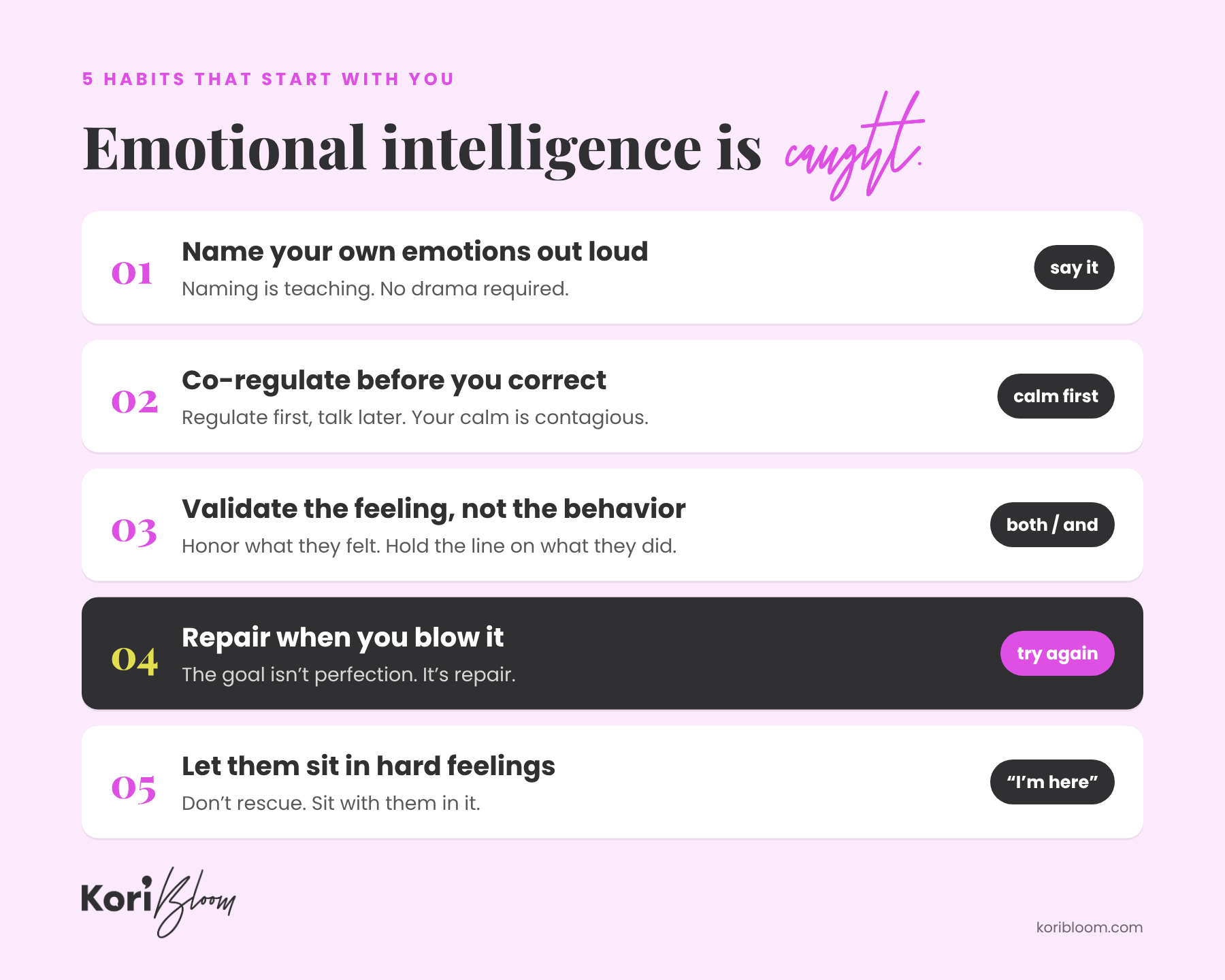
Table of Contents
First reframe: don’t take their behavior personally
Most parenting reactivity starts here. Your kid does something that feels like it’s aimed at you — the eye roll, the sigh, the slammed door, the “I hate you.” In that moment, your nervous system reads it as a personal attack. And from that read, every move you make is going to be defensive.
But the truth is almost always: it’s not about you. It’s about a feeling they don’t have language for yet, a need that isn’t getting met, or a moment that overwhelmed them. The eye roll is just the tip of the iceberg. What you can see is only a small part of what’s really going on. Understanding what’s beneath the surface is where the real insight lives.
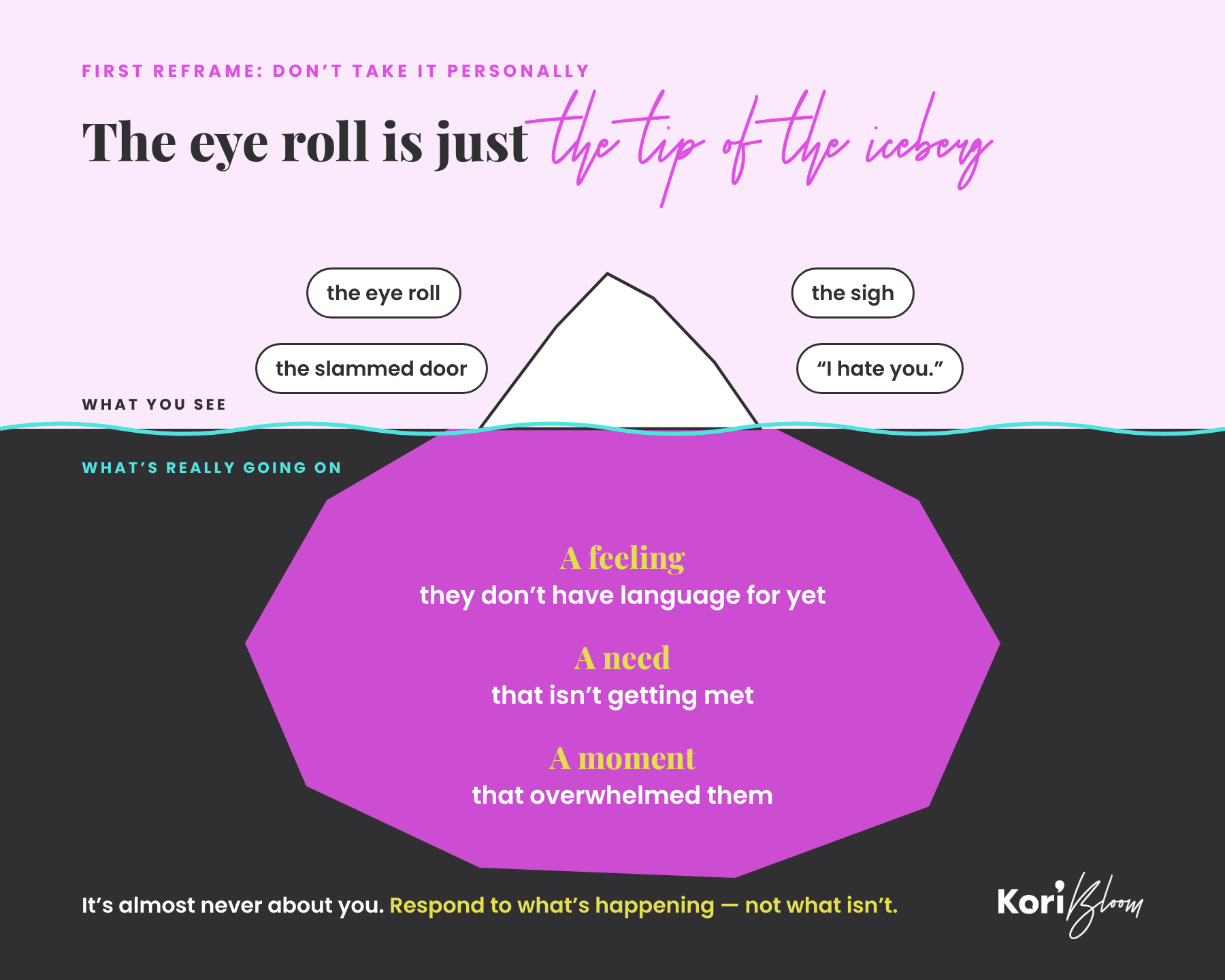
If you stop taking their behavior personally, you free yourself to actually respond to what’s happening — instead of defending yourself against what isn’t.
Habit #1: Name your own emotions out loud
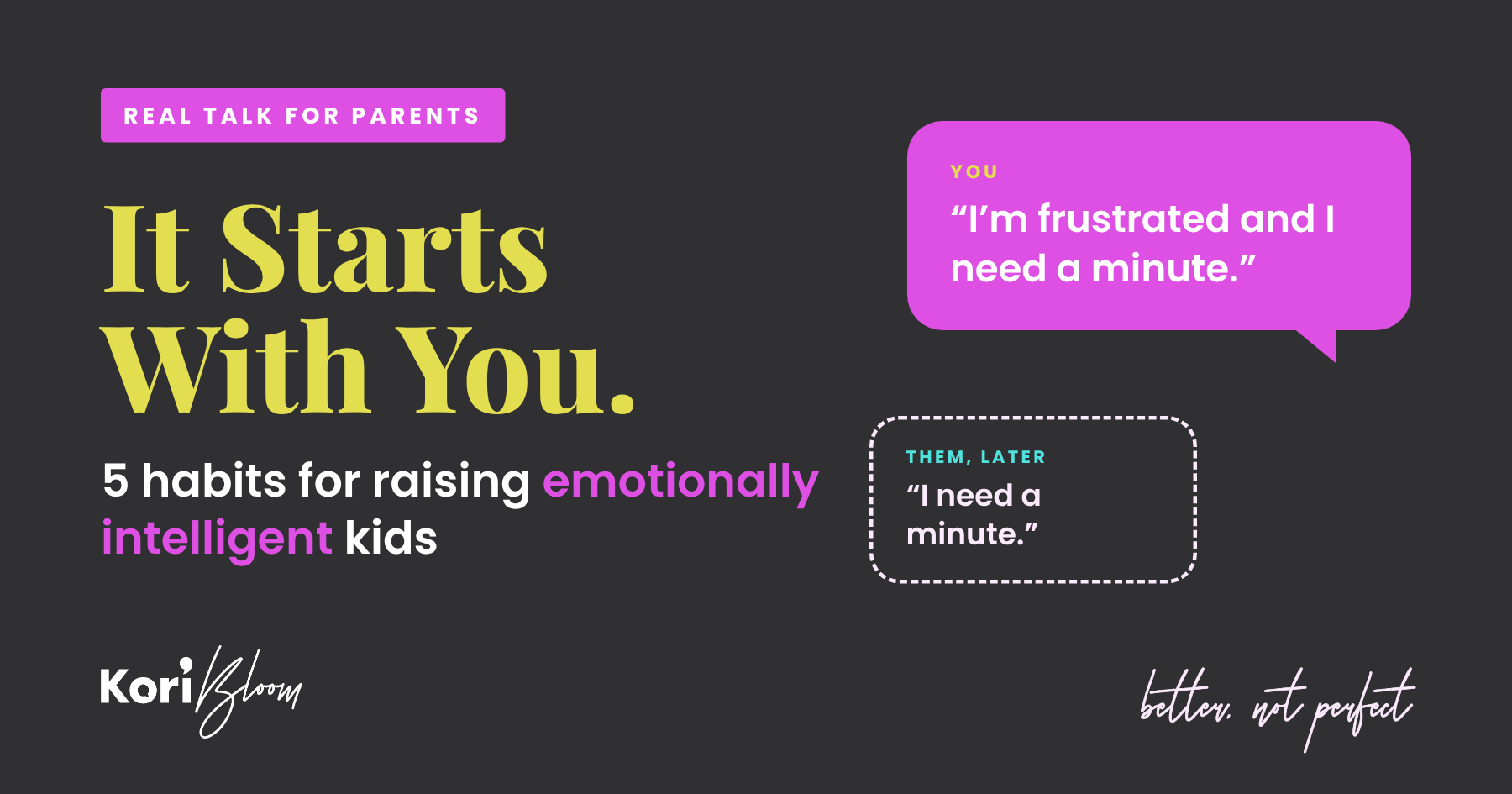
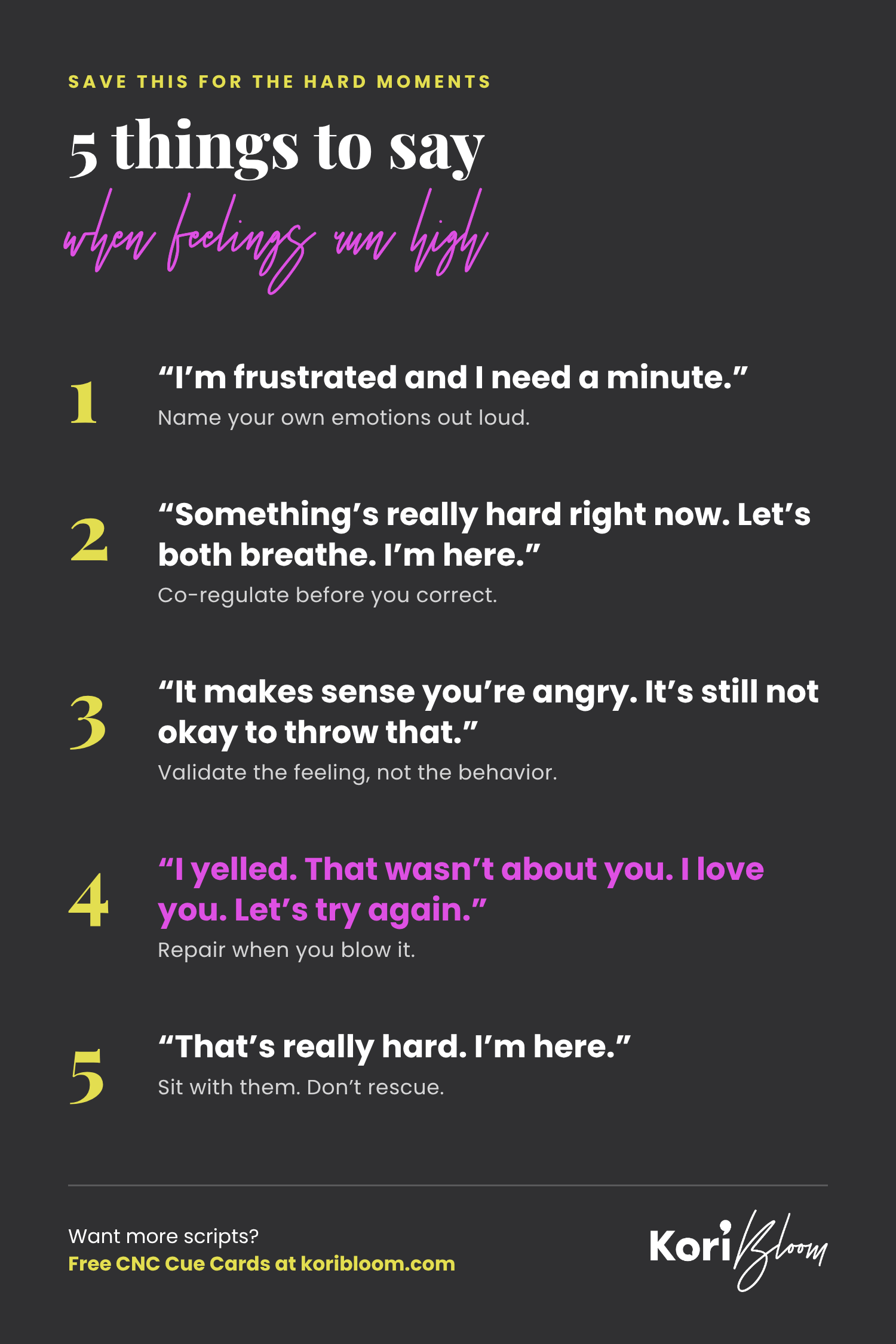
Kids absorb emotional vocabulary the same way they absorb language: by hearing the people they love use it. If they only ever hear you say “I’m fine” in 14 different tones, they will become adults who say “I’m fine” in 14 different tones. If they hear you say “I’m frustrated and I need a minute,” that becomes available to them too.
Naming is teaching. You don’t have to make it dramatic. Just name it.
Habit #2: Co-regulate before you correct
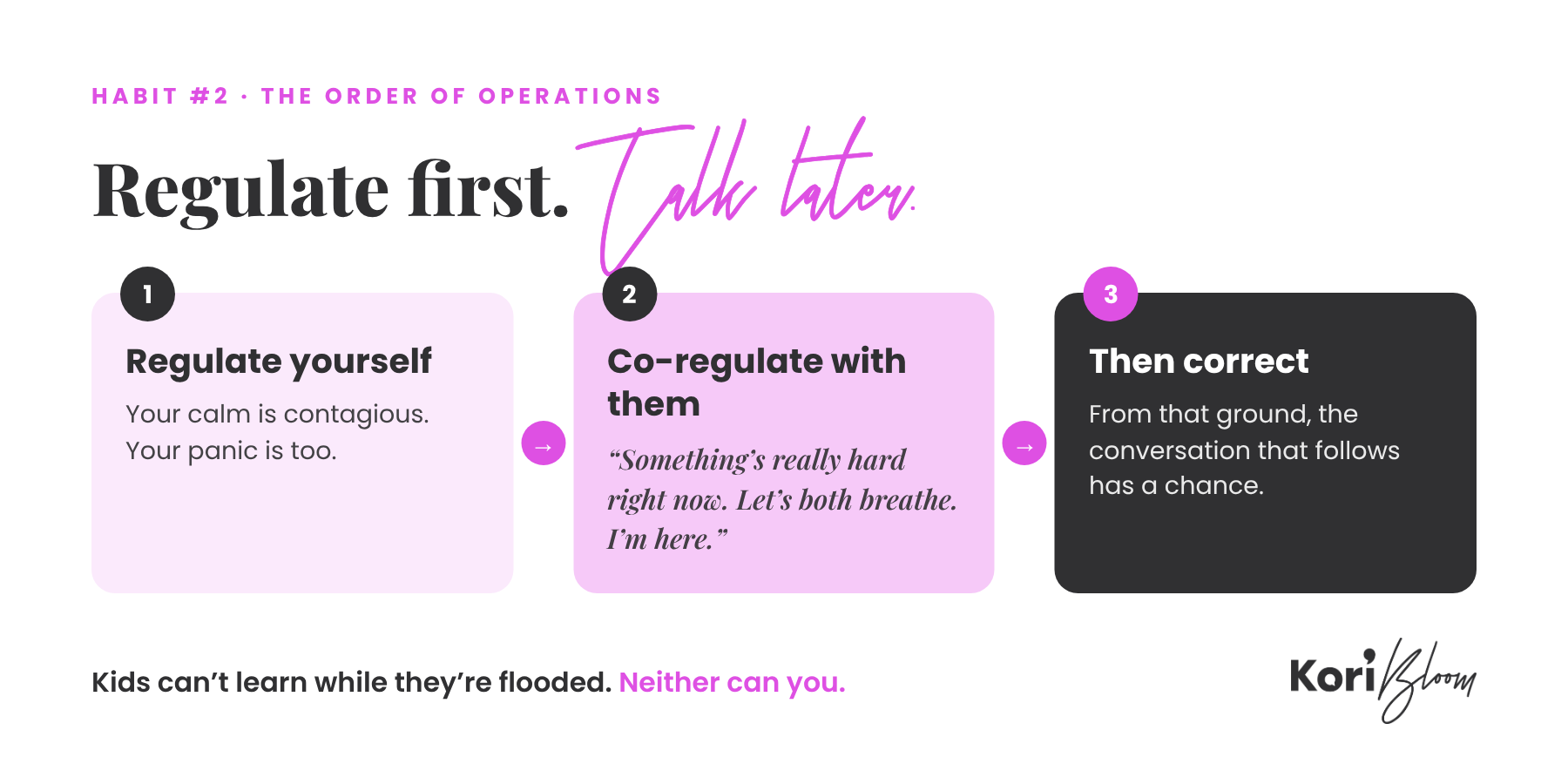
Kids can’t learn while they’re flooded. Neither can you. The order of operations for any hard moment is: regulate first, talk later. Your calm is contagious. Your panic is too.
“Something’s really hard right now. Let’s both breathe. I’m here.”
From that ground, the conversation that follows has a chance. From a flooded state, it doesn’t.
Habit #3: Validate the feeling, not the behavior
You can hold the line on what they did and honor what they felt. These aren’t in conflict.
“It makes sense you’re angry. It’s still not okay to throw that.”
This sentence does two things at once: it tells your kid their inner world is real and acceptable, and it tells them not every feeling gets to drive the car. That’s emotional intelligence.
Habit #4: Repair when you blow it
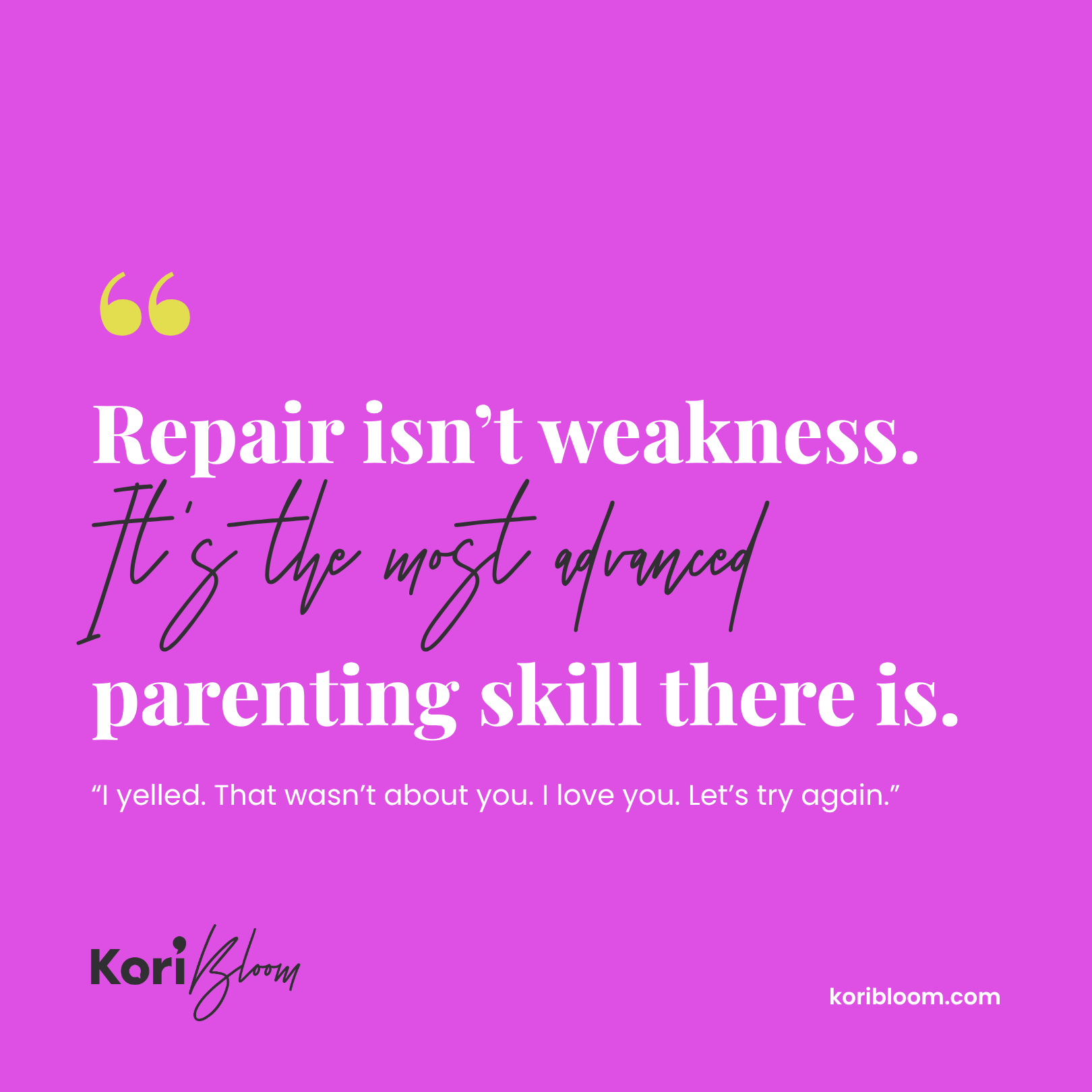
You will lose it. You will say the thing. The behavior to model isn’t perfection — it’s repair. “I yelled. That wasn’t about you. I love you. Let’s try again.” This sentence teaches more about emotional intelligence than any program ever will.
Repair is not weakness. Repair is the most advanced parenting skill there is.
Habit #5: Let them sit in hard feelings (without rescuing)
The most loving thing you can do for an emotionally intelligent kid is to not rescue them from every uncomfortable feeling. Disappointment, frustration, loneliness, boredom — these are the raw materials of emotional capacity.
Your job isn’t to make the feeling go away. Your job is to sit with them in it. “That’s really hard. I’m here.” That’s the whole job. They’ll learn to do the rest from watching you do that.
Why this is whole-person leadership
Every habit on this list applies at work too. Naming your emotions, co-regulating before correcting, validating without enabling, repairing after a misfire, letting your team sit in difficulty without rescuing them — these are the same five habits that make great leaders. Parenting and leadership are not separate. They’re the same skills, in different rooms.
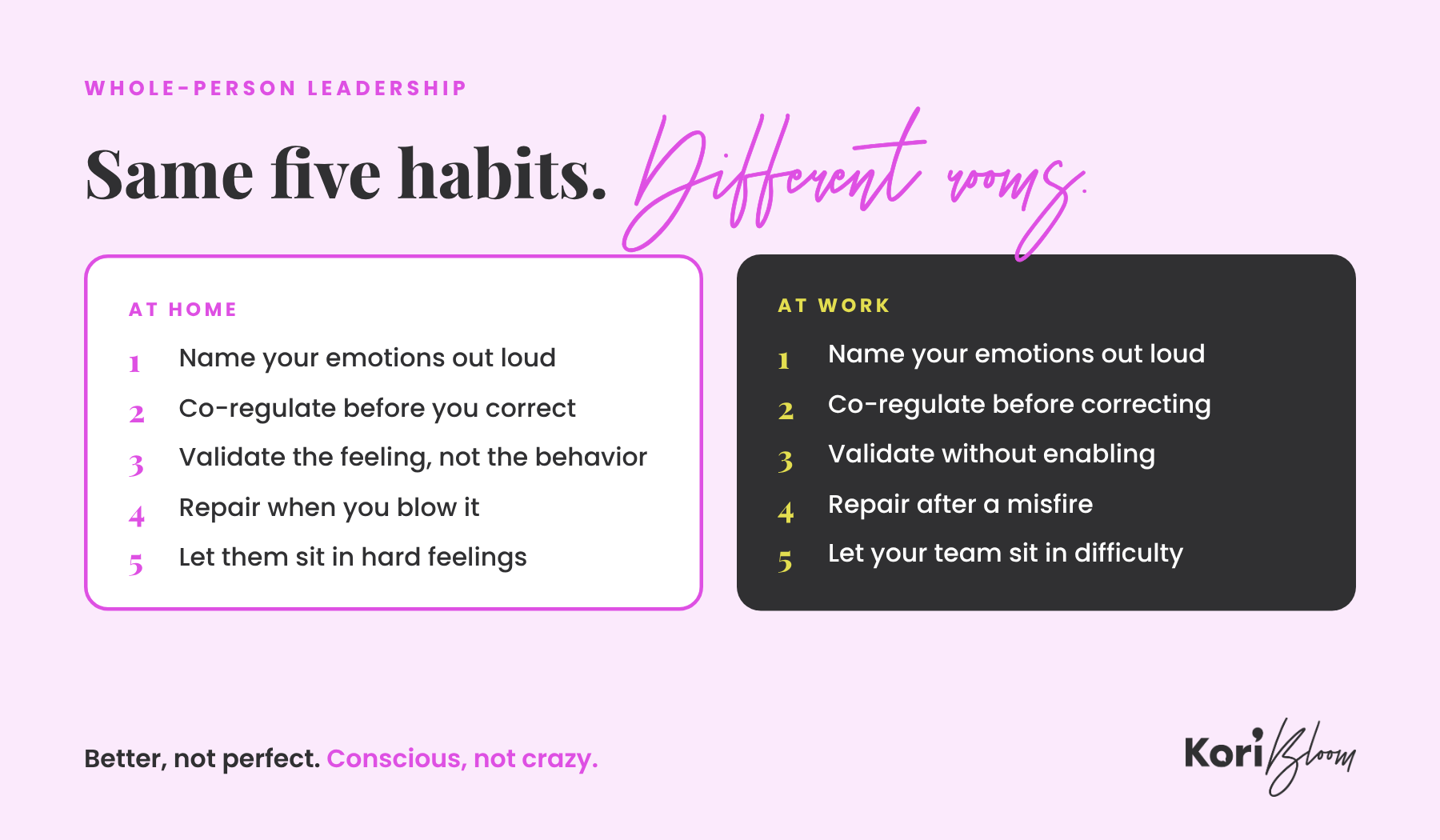
Better, not perfect. Conscious, not crazy. Five habits at a time.
Get the scripts that build emotional intelligence — yours and theirs
The CNC Cue Cards are a free, downloadable set of scripts for the moments where emotional intelligence either lands or doesn’t. Download them at koribloom.com/resources/cue-cards.
The Conscious Not Crazy 6-week parenting course walks you through all five habits with worksheets and community support. Learn more at koribloom.com/course/conscious-not-crazy.
Listen on the Conscious Not Crazy podcast.
About Kori Bloom
Kori Bloom is a keynote speaker, author of The Business of Parenting, and creator of the Conscious Not Crazy parenting course. She helps growth-minded leaders and parents communicate with composure, alignment, and intention — in every room. Learn more at koribloom.com.