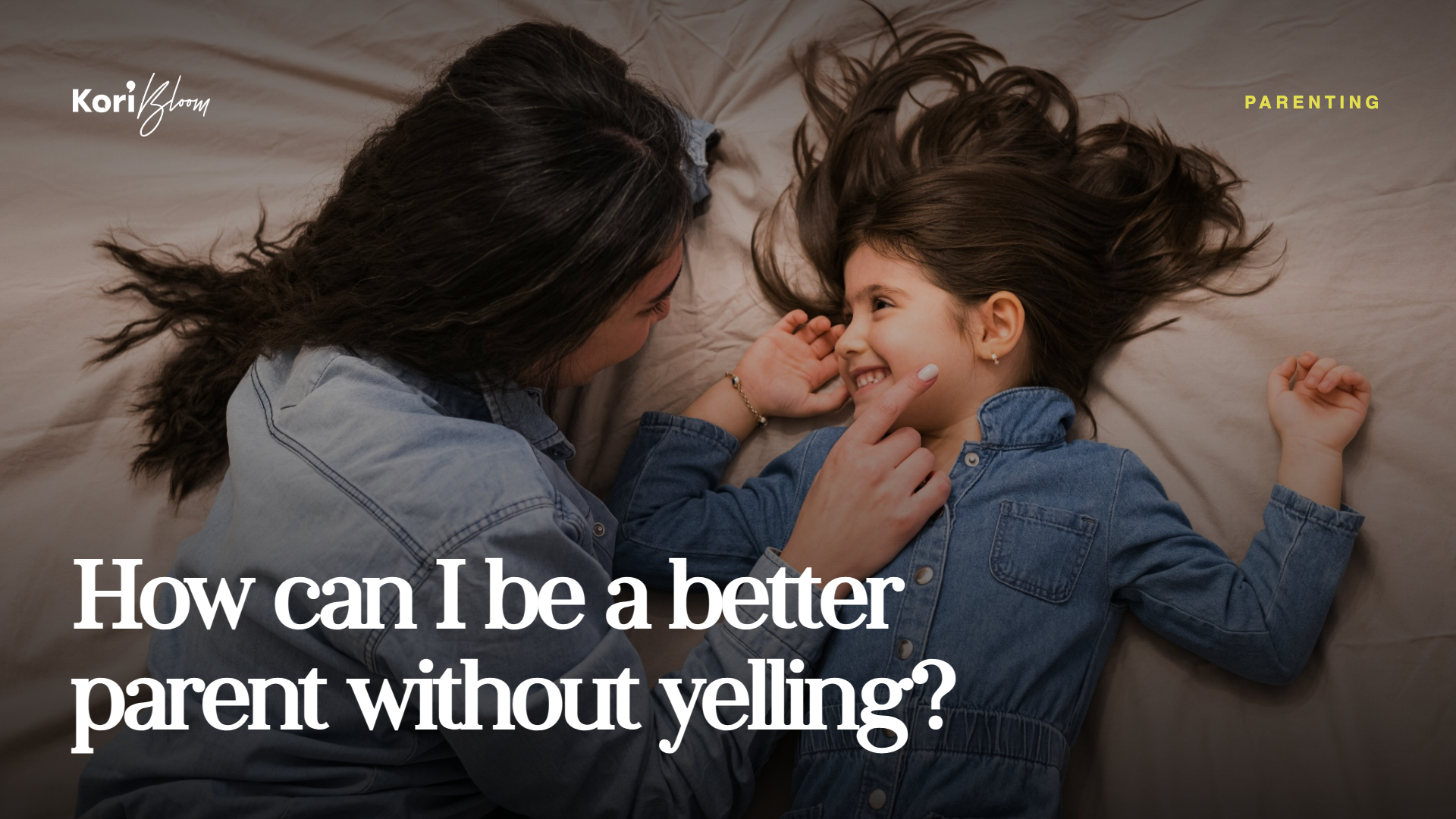

You can hear yourself doing it. The sigh. The clipped voice. The threat you swore you'd never use. Intentional parenting isn't about getting your kids to behave better — it's about catching yourself before you parent on autopilot.
In a recent episode of Conscious Not Crazy, I sat down with Aaron Stroman — host of the Intentional Father podcast and a former youth pastor who has spent years in the trenches with thousands of families. We talked about the moment most parents miss: the gap between what you mean to do and what you actually do under pressure. This post pulls the most useful takeaways from that conversation into seven shifts you can practice this week.
Table of Contents
What Intentional Parenting Actually Means (vs. Parenting by Accident)
Intentional parenting means making your values louder than your reactions. It's not a personality type, a Pinterest board, or a polished morning routine. It's the simple discipline of pausing long enough to choose your response instead of inheriting it.
Aaron put it this way: most parents don't fail because they don't love their kids. They fail because they're running their kids' childhood on autopilot — repeating patterns they never stopped to question.
When you parent by accident, three things tend to happen:
- You react to behavior instead of the need underneath it.
- You pass down your own unhealed limitations without realizing it.
- You confuse compliance with connection — and lose the long game.
The shift isn't about being perfect. It's about being aware. Better not perfect is the standard.
The Hidden Cost of Reactive Parenting
Aaron talked about something every parent feels but rarely names: the inheritance effect. The phrases your parents used on you sneak back into your mouth at the worst possible times. The fears they had for you become the fears you project onto your kid. The avoidance, the over-explaining, the volume — it travels.
This isn't about blaming your parents. It's about owning that you are the next link in the chain. What you don't deal with, your kids will inherit. What you do deal with, they get to skip.
That's why conscious parenting starts with self-leadership — not strategy. Research on the parent–child relationship from Harvard's Center on the Developing Child backs this up: a child's nervous system is shaped by the adults around them long before any “parenting technique” comes into play.
7 Intentional Parenting Shifts to Practice This Week
You don't need an overhaul. You need seven small moves that, run on repeat, change the temperature of your house.
1. Trade Compliance for Connection
A compliant kid is a quiet kid. A connected kid is a kid who comes back to you when it matters. Compliance feels like winning today; connection wins ten years from now. When your child resists, ask yourself: am I trying to control the moment, or am I trying to keep the relationship open?
2. Ask “What's Really Going On?” Before You Correct
Behavior is data. The eye roll, the meltdown, the silence — every behavior is pointing at a need. Before you discipline, get curious. Tired? Hungry? Overwhelmed? Scared? Not heard? You'll respond better to the root than the symptom every single time.
3. Let Your Kids See Your Real Work
Aaron made a point I love: your kids should know what you actually do all day. Not the polished version — the real version. Let them sit in on a call. Walk them through a problem you solved at work. Show them how grown-ups handle hard things. They learn more from watching you wrestle with reality than from any lecture.

4. Model Resilience Out Loud
Kids don't need parents who never fail. They need parents who narrate the comeback. When you mess up, say so. When you're frustrated, name it. When you push through, point it out. Modeling resilience out loud teaches your kids that recovery is part of life — not proof that something is wrong.
5. Lead Yourself First
This is the cornerstone of every framework I teach. You can't regulate a child you can't regulate yourself around. Before you walk into the kitchen for the third “please put your shoes on,” take three breaths. Drop the shoulders. Lead yourself first. Your composure is contagious — and so is your chaos.
6. Choose One Thread to Strengthen
Inside Conscious Not Crazy, I teach the THREADs framework — parents focus on one thread at a time: Values, Mindset, Attention, Communication, Action, or Growth. Trying to fix everything is how you fix nothing. Pick one. Practice it for two weeks. Then add another.
7. Trade Perfection for Presence
You don't owe your kids a flawless parent. You owe them a present one. Most of the regret parents carry isn't about the times they messed up — it's about the times they weren't really there. Put the phone down for ten minutes. Sit on the floor. Ask a real question. Presence is the cheapest, most powerful intervention you have.
How to Start Intentional Parenting When You're Already Tired
Most parents come to this work depleted. You don't need more guilt — you need a smaller ask. Try this for one week:
- Pick one of the seven shifts above.
- Decide where you'll practice it (bedtime? dinner? after-school pickup?).
- Track it for seven days — one tally per attempt, no judgment on misses.
- At the end of the week, ask: what changed in the room?
This is what conscious parenting looks like in real life. Not a transformation — a repetition. Better, not perfect.
Want Scripts for the Hard Moments?
If you've ever frozen mid-conflict and thought, “I have no idea what to say right now,” you are not alone — and you are not broken. You're a human being who never got handed a script.
That's exactly why I built the CNC Cue Cards — short, in-the-moment phrases for tantrums, teen pushback, sibling fights, and the everyday pressure points where your old patterns try to win. They live on your phone or your fridge. You pull one out, you say it, you breathe. That's it.

Frequently Asked Questions
Q: What is intentional parenting in simple terms?
A: Intentional parenting is the practice of choosing your response instead of reacting on autopilot. It means leading yourself first so you can lead your kids with clarity, calm, and connection — not just rules.
Q: How is intentional parenting different from gentle or conscious parenting?
A: They overlap, but intentional parenting puts the emphasis on awareness and behavior change, not philosophy. It's less about labels and more about practical scripts and habits you can actually use under pressure.
Q: Where do I start if I'm already overwhelmed?
A: Pick one shift, not seven. Most parents start with “Lead Yourself First” — three breaths and a softer voice before you respond. Small reps beat big resolutions every time.
Q: Can intentional parenting work with teenagers?
A: Yes — and it's often the only thing that does. Teens respond to connection, not control. Get curious, model resilience out loud, and stay in the relationship even when the door slams. Connection wins the long game.
Listen, Then Try One Thing Tonight
Intentional parenting isn't a personality test you have to pass. It's a quiet decision you make ten times a day to be a little more present, a little more curious, and a little less reactive than yesterday. Listen to the full conversation with Aaron Stroman on the Conscious Not Crazy podcast — and if you want the exact phrases I use in my own house when things go sideways, grab the CNC Cue Cards and try one tonight. You'll feel the difference before bedtime.