
You can do everything right on paper and still feel like you're holding the whole team together with your bare hands. You hit the numbers. You run the meetings. You answer the late-night messages. And somewhere in there, you notice you're leading from your last nerve — reacting to the inbox, managing everyone else's pressure, bracing for the next fire. The fix isn't another tactic. It's lead yourself first leadership — the shift that changes how your whole team communicates.
Most leadership advice would hand you another tactic here. A new framework for your team. A better one-on-one template. A communication "hack." Those things matter, but they sit on top of the one thing the advice usually skips: you. The shift that actually changes how your team communicates is lead yourself first leadership — learning to manage how you show up under pressure before you try to manage anyone else.
I didn't learn that in a boardroom. I learned it in my living room.
My kids were two and four, and I was more reactive than I'd ever been in my life. Frustrated, overwhelmed, constantly hunting for the right strategy or philosophy to fix their behavior. At the time, I thought they were the problem. What I eventually realized was that the real issue wasn't my kids — it was me. Parenting held up a mirror no job ever had. The shift happened when I stopped asking, "How do I get them to change?" and started asking, "How do I need to change?" That single question changed everything. The more I worked on leading myself, the better everything else became.
Table of Contents
What lead yourself first leadership actually means
Leadership doesn't begin when you step into a management role or become responsible for a team. It begins with you.
Lead Yourself First™ is built on the belief that leadership is an inside job. Before we can effectively lead others, we have to learn to lead ourselves — and that starts with self-awareness, self-control, and personal responsibility. Too often we spend our days reacting to people and circumstances outside our control. Real leadership looks different. It's the ability to pause, think, and respond with intention rather than react from emotion.
Whether you're leading little people at home or a team at the office, the principle is the same: leadership starts with self-leadership. Because you can't teach what you don't possess. You can't model what you don't practice. And you can't expect from others what you're unwilling to develop in yourself.
Here's the part most leaders miss: self-leadership isn't separate from "real" leadership. It is the real leadership. Your team doesn't take its cues from your org chart — it takes them from how you handle pressure, navigate conflict, and show up when things don't go as planned. Leadership isn't situational. It's personal. The same person shows up in every room.
Why teams feel it when a leader hasn't done this work
A leader who hasn't learned to lead themselves first usually isn't a bad leader. They're a committed one — which is exactly why it's hard to see. The cost shows up sideways, in patterns the whole team quietly learns to work around:
- Reactive communication — They respond emotionally in meetings, fire off an email they later regret, or let frustration drive decisions.
- Micromanaging and control — They struggle to trust, so they over-involve themselves in every detail instead of empowering the team.
- Avoiding hard conversations — Instead of addressing issues directly, they delay feedback and hope problems resolve themselves.
- Blaming and externalizing — The focus lands on what everyone else needs to change, rather than their own role in it.
- Fear-based leadership — They lean on pressure, guilt, or authority to drive results instead of trust, clarity, and connection.
At the core, these behaviors stem from the same place: a gap in self-awareness and self-regulation. (Decades of research on what self-awareness really is back this up — most of us think we're far more self-aware than we actually are.) When leaders haven't learned to manage their own thoughts and reactions, they try to manage and control everyone around them instead. The irony is that the more we try to control others, the less influence we actually have. When leaders can't control themselves, they often try to control everyone else.

The shift: lead yourself first, then lead the room
So how do you actually make the shift? It starts by getting honest about what you bring into the room before anyone else says a word — your values, your mindset, where your attention goes, and how present you actually are. In my work I call these the THREADs of whole-person leadership: Values, Mindset, Attention, Communication, Action, and Growth. Each one deserves its own deep dive (more on those in future posts) — for now, just know they're the threads running through how you lead yourself and, in turn, everyone around you.
You don't have to overhaul yourself to start. Lead yourself first leadership comes down to a few repeatable moves you make in the moments that used to run you:
- Notice the trigger. The snap, the tight chest, the urge to fix it right now — that's information, not instruction. Something just hit a value or a fear that matters to you.
- Make space before you respond. A breath, a beat, a question to yourself: what does this moment actually need from me? That gap is where self-leadership lives.
- Choose the response on purpose. Lead from your values, not your last nerve. The same situation, met with intention instead of reaction, sends a completely different signal to your team.
That's the engine behind my Trigger-to-Response Map — a simple tool for catching your reactive patterns and choosing a steadier response before it ever reaches the people you lead. Better, not perfect. You're not trying to become unflappable. You're trying to put a half-second of choice between the trigger and the team.
Want the scripts for the hard moments?
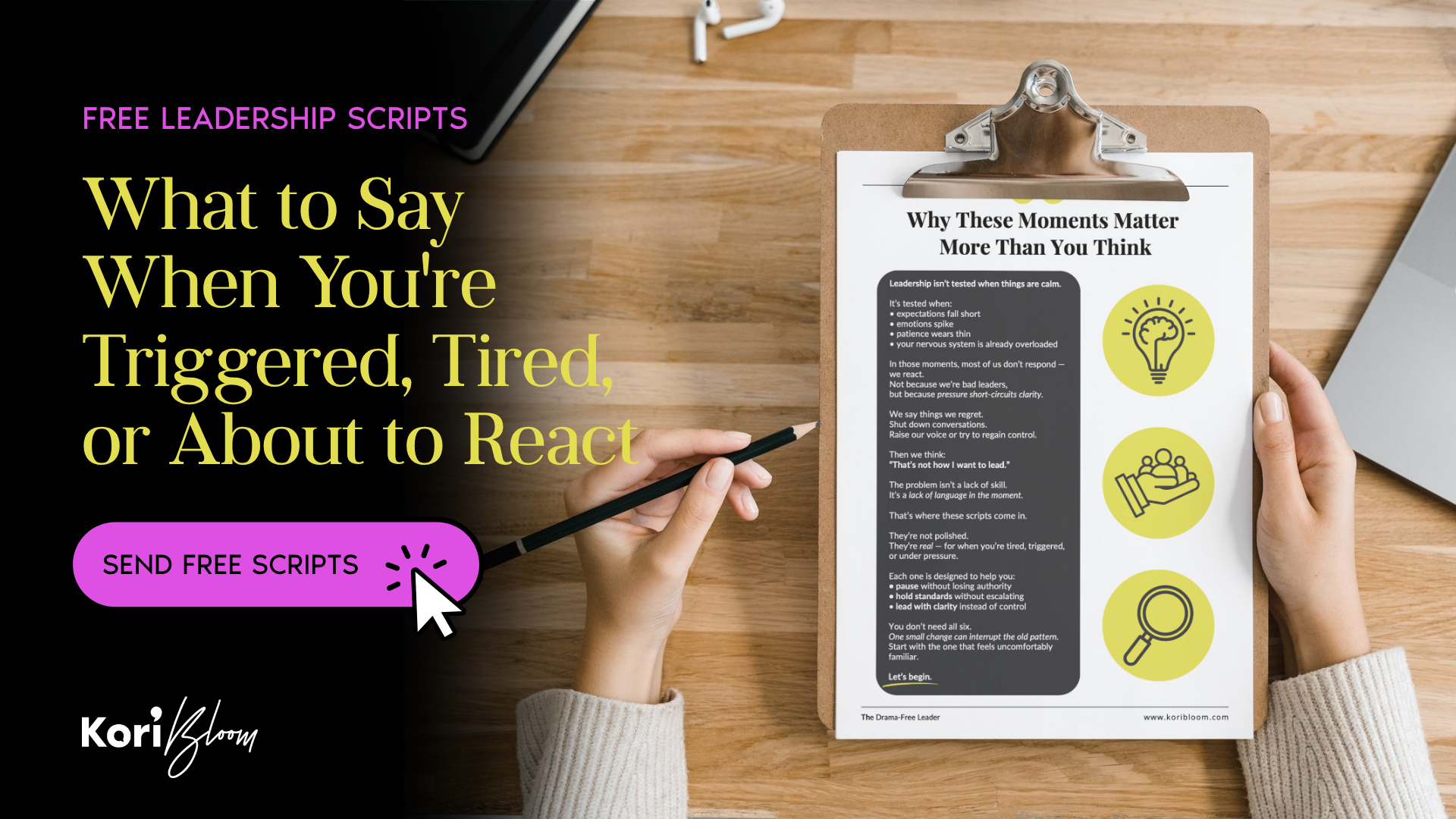
The Drama-Free Leader: 6 Scripts to Replace Reactive Communication is a free PDF I built for the leaders I work with — the exact words to use when you're triggered, pressured, or repeating yourself for the tenth time. Grab it here.
What changes when you lead yourself first
When you make this shift, the difference doesn't stay with you — it spreads. Communication gets cleaner because you're not reacting through it. Ownership goes up because your team isn't spending energy managing your moods. Trust deepens because you've become predictable in the best way: steady under pressure, the same leader on the hard days as the easy ones.
Here's what it looks like in a real moment. When a customer is upset, it's easy to get defensive, take it personally, or focus on proving you're right. Earlier in my career, that's exactly what I would have done. Now, leading myself first, I approach it differently — I stay composed, manage my emotions, and get curious instead of defensive. I treat their frustration as information, not a threat. In one situation, an upset customer came in ready for a fight. Instead of matching their energy, I listened. I asked questions. I focused on understanding before solving. Within minutes the conversation shifted from confrontation to collaboration — and we didn't just resolve the issue, we preserved the relationship. That's the whole lesson: if I can't lead myself first, I can't effectively lead anyone else.
"Kori helps people become more aware of how they respond to life's challenges and pressures. Through practical insights and relatable examples, she empowers others to move from reacting on autopilot to responding with greater intention and self-awareness."
— Kim, The Pinnacle Society
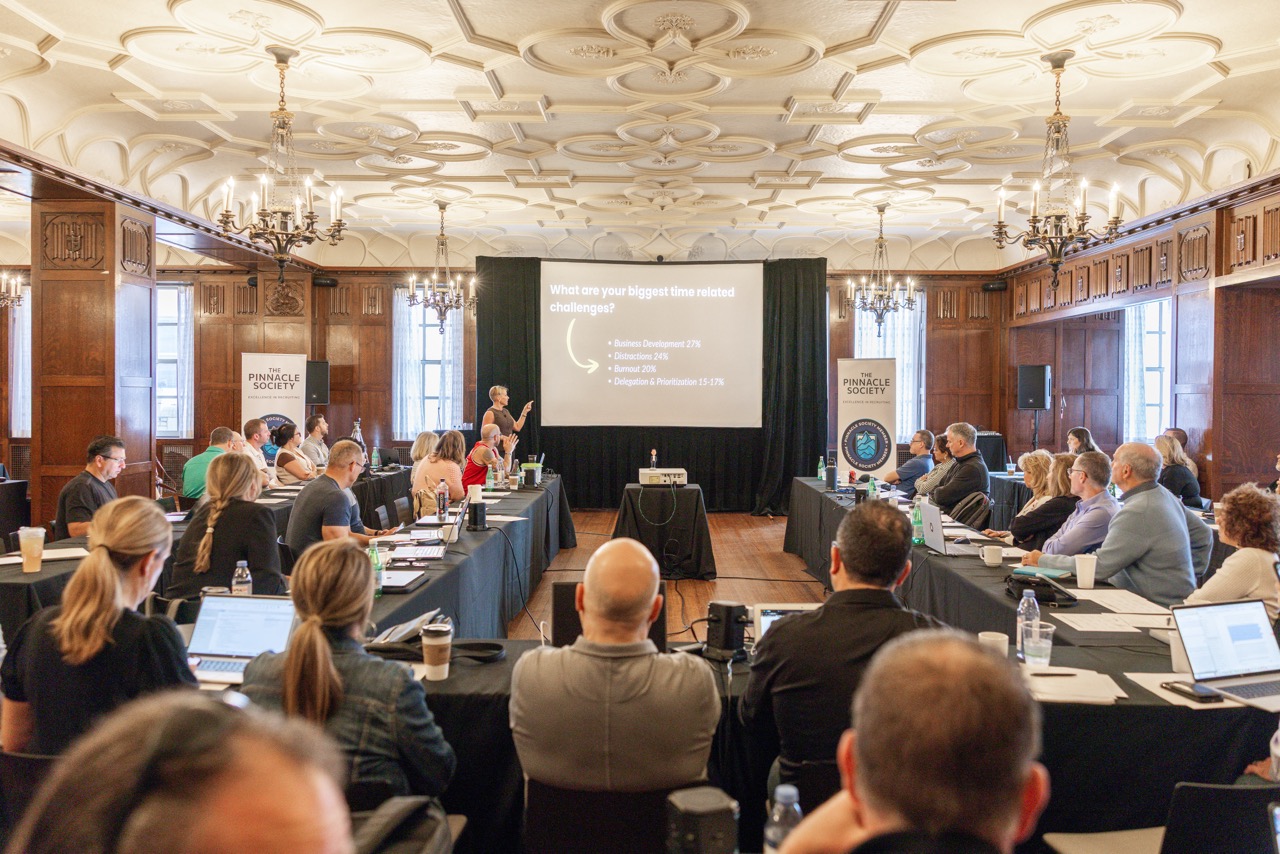
That feedback isn't an outlier. After a recent session with The Pinnacle Society, 100% of respondents found the session valuable, 100% would hear me speak again, and 94% said it was actionable. The composure you build at work is the same composure you bring home. You stop leaving your best self at the office and showing up depleted to the people who matter most — and you lead with both connection and effectiveness, in every room.
Start with you: lead yourself first leadership
You don't need a new system to manage your team. You need a steadier place to lead them from. That's what lead yourself first leadership gives you — and it's the one shift everything else is built on.
Want the words for the moments that test you most? Download The Drama-Free Leader: 6 Scripts to Replace Reactive Communication — a free, practical tool you can use on Day 1. And if you're building a leadership event or team offsite, the Lead Yourself First keynote turns this shift into something your people leave with — not just inspiration, but scripts and frameworks they'll use the next morning. Book Kori for your next event.
Frequently Asked Questions
Q: What does "lead yourself first" leadership actually mean?
It means managing your own values, mindset, attention, and emotional presence before you try to manage anyone else's. Leadership is an inside job — you can't model composure, clarity, or accountability for your team if you haven't built it in yourself first.
Q: How is self-leadership different from regular leadership?
Self-leadership isn't separate from "real" leadership — it's the foundation of it. Your team takes its cues from how you handle pressure, not from your title. When you lead yourself well, clarity, trust, and ownership follow naturally.
Q: How do I start leading myself first in high-pressure moments?
Use three repeatable moves: notice the trigger, make space before you respond, and choose your response on purpose. Putting even a half-second of choice between the trigger and your team changes the signal you send.
Q: Does this apply outside of work?
Yes. The same composure you build at work is the composure you bring home. That's the heart of whole-person leadership — you don't have separate selves for the office and the dinner table.