You've been in the meeting where the room goes quiet after someone messes up. You've also been the parent who hears themselves say the exact thing they swore they never would. In both moments, the instinct is the same: take control, fix it, manage the person in front of you. But the more I coach leaders and parents, the more convinced I am that control isn't leadership at all. Real leadership starts with self-leadership — leading yourself first, before you ever try to lead anyone else.
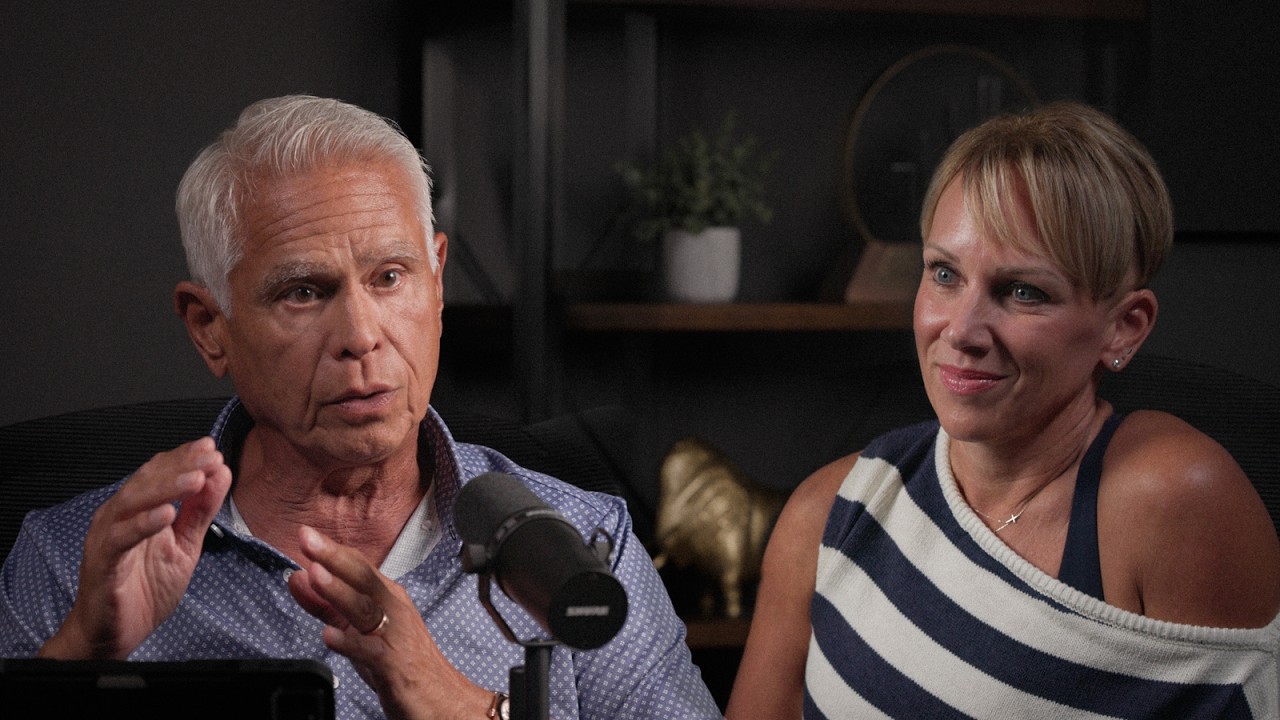
I recently sat down on the Divided Attention podcast with host Don Peterson — a serial entrepreneur who built a billion-dollar company and does not hand out easy agreement. He pushed hard on what leadership actually is, and it turned into one of the most honest conversations I've had about the difference between managing and leading. Watch the full episode below, then let's unpack the parts you can use on Monday morning.
Table of Contents
What Is Leadership, Really?
Don opened with a question worth sitting with: is leadership a state, an aura, or a set of behaviors that prove you're a leader? His answer was that leadership is mostly silent — it's not what you say, it's how you act. Presence. Influence. The way people watch you walk into a room and decide, consciously or not, whether they want to follow.
I don't disagree. But here's where I'd add a layer. That silent presence people find so magnetic? It isn't a personality trait some lucky people are born with. It's the visible result of a lot of invisible work happening on the inside. The leaders who inspire us aren't performing composure — they've actually built it. And you can't build in others what you haven't built in yourself.
Self-Leadership: You Can Only Lead Yourself First
Early in my career I went looking for a way to manage behavior — specifically my strong-willed toddler's. What I found instead flipped the whole premise. You cannot make another human being do anything. Not really. You can understand what's driving their behavior, and you can lead your own response. That's it. That's the whole leverage point.
This is the foundation I call Lead Yourself First. Self-leadership means you own your reactivity before you address anyone else's. When an employee misses a deadline or your kid rolls their eyes, the first move isn't to control them — it's to notice what just got triggered in you and choose your next action on purpose instead of on autopilot.
And it applies to everyone, because we are all leading someone. If you have kids, you're a leader. If you teach, manage, or own a business, you're a leader. The title is optional. The influence is not.
The Pendulum: From "Because I Said So" to Rescuing Everyone
I have a theory I shared with Don that I call the pendulum. A lot of us were raised on the authoritarian model: do as I say, don't cry, go figure it out. There was real damage in the shame and suppressed emotion — but there was also grit, resourcefulness, and the expectation that no one was coming to save you.
Then the pendulum swung all the way to the other side. Now we have helicopter and lawnmower parenting, adults inserting themselves into every outcome of their kids' lives so no one ever falls down and skins a knee. Don and I both landed in the same place here: that swing hasn't produced more capable young people. It's produced fragility. As Jonathan Haidt argues in The Coddling of the American Mind, over-protection is quietly linked to the mental-health struggles of this generation.
The answer isn't to pick a side of the pendulum. It's to land in the middle — empathy and accountability. It's okay to be upset; it's not okay to stay stuck. I feel the emotion with you, and I still expect you to solve the problem.
Curiosity Over Control: The Skill That Changes Every Room
Don told a story that perfectly captured the difference between managing and leading. He hired a woman named Erin who came from a workplace where a missing condiment could get a clipboard thrown at her. When he told her to "just take care of" ordering lunch, she came back five separate times for approval — not because she was incapable, but because she'd been conditioned by fear.
That's not a competence problem. It's a trust problem, and it's the same one I see between managers and their teams and between parents and their kids. When we lead with control, we get compliance and anxiety. When we lead with curiosity and positive intent, people drop their guard and we finally get accurate information: are they not capable, or were we just not clear?
The practical shift is small and it works in every room:
- Stop telling, start asking. "Why do you think that happened?" builds a critical thinker. "Do this because I said so" builds a rule-follower who's lost when you're not there.
- Assume the best first. Approach the frazzled employee or the melting-down kid with curiosity, not accusation.
- Don't take behavior personally. Someone's bad moment is rarely about you — and reacting like it is only makes you smaller.
Attention Is a Leadership Tool: What You Focus On Grows
Here's a pattern that shows up identically at work and at home: when things are going well, we say nothing. When something breaks, we pour attention on it. Then we wonder why we're always managing problems.
Whatever we focus on grows. I'm not talking about hollow praise or thanking a teenager for doing the bare minimum — that's just inflation, and Don and I agree it backfires. I'm talking about noticing. "I noticed you got home on time." "I noticed you were frustrated, and I noticed you figured it out." Naming what's working, without over-inflating it, quietly encourages more of it. That's a leadership tool, and it costs you nothing but attention.
Whole-Person Leadership: You're the Same Human at Work and at Home
We've sold ourselves a lie that our personal and professional lives are separate. They're not. You are one human being whether you're walking into a boardroom or your kitchen, and the skills that run a home — boundaries, curiosity, composure under pressure — are the same ones that lead a team. Honestly, the home was the harder leadership job. You can't quit, there's no sabbatical, and there are no days off.
This is the heart of whole-person leadership, and it's why I organize my work around six threads that hold true in every room:
- Values & Alignment — the mission at work, the values on your kitchen wall at home.
- Mindset — open beats closed every time, because everyone arrives with different baggage.
- Attention — what you focus on grows.
- Communication — boundaries and connection, not one or the other.
- Action — accountability, and repairing fast when you get it wrong.
- Growth — resilience, and the willingness to fail better.
That last one matters most to me. My mantra is better, not perfect. I coach parents, I've written a book, and I still get it wrong daily — I'm just quicker to recognize it and quicker to repair. I have an arrow tattooed on my arm for exactly this reason: an arrow only launches forward after it's been pulled back. The hard moments aren't the detour. They're the draw.
Managing vs. Leading: The Honest Bottom Line
So what's the real difference between managing and leading? Managing is what you do to a task or a process. Leading is who you are under pressure — and whether the people around you want to follow that. Both matter. But research consistently shows managers drive the majority of the variance in team engagement, according to Gallup's workplace research, and you can't influence anyone toward a mission you're not living yourself.
If you're modeling one thing and saying another — telling your kids to put down their phones while you scroll in the driver's seat — you're not leading in that moment, no matter your title. Leadership is living in alignment with the belief. It always circles back to the same starting line: lead yourself first.
Frequently Asked Questions
Q: What is self-leadership?
A: Self-leadership is the practice of managing your own mindset, emotions, and reactions before you attempt to lead anyone else. It means owning your response under pressure rather than trying to control the people around you. It's the foundation every other leadership skill is built on.
Q: What is the difference between managing and leading?
A: Managing is directing tasks, processes, and outcomes. Leading is influence — how you show up, model behavior, and inspire people to follow a shared mission. You can manage someone into compliance, but you can only lead someone into commitment.
Q: How does parenting relate to leadership?
A: The core skills are identical — boundaries, curiosity, composure, and communication — just with different language. Whole-person leadership recognizes that you're the same human at work and at home, so growing one strengthens the other.
Q: How do I start practicing self-leadership today?
A: Start by noticing your triggers. The next time you feel reactive, pause before you respond, ask a question instead of issuing a command, and choose your action on purpose. Better, not perfect — small, repeatable shifts compound.
Lead Yourself First
The most freeing idea from this whole conversation is also the most demanding: you can't control anyone else, so you might as well get very good at leading the one person you can. Composure, curiosity, and alignment aren't traits you're born with — they're built, and they're built from the inside out.
If this is the kind of practical, whole-person leadership your team or organization needs, I'd love to bring it into your next event — you can book Kori to speak at your next event, or listen to more conversations like this one over on the podcast. Lead yourself first, and watch what changes in every room.