
Somewhere along the way, we built a story that the only path to a successful adult life runs through a four-year college, a corner office, and a knowledge-economy job. That story has cost a lot of kids — and a lot of parents — a great deal of peace.
In a recent Conscious Not Crazy episode, I sat down with Brice Dawson and Skylor Alexander — two leaders in the Kansas City construction world — to talk about what we’re actually missing when we leave hands-on learning and the trades out of the conversation about how to raise capable kids.
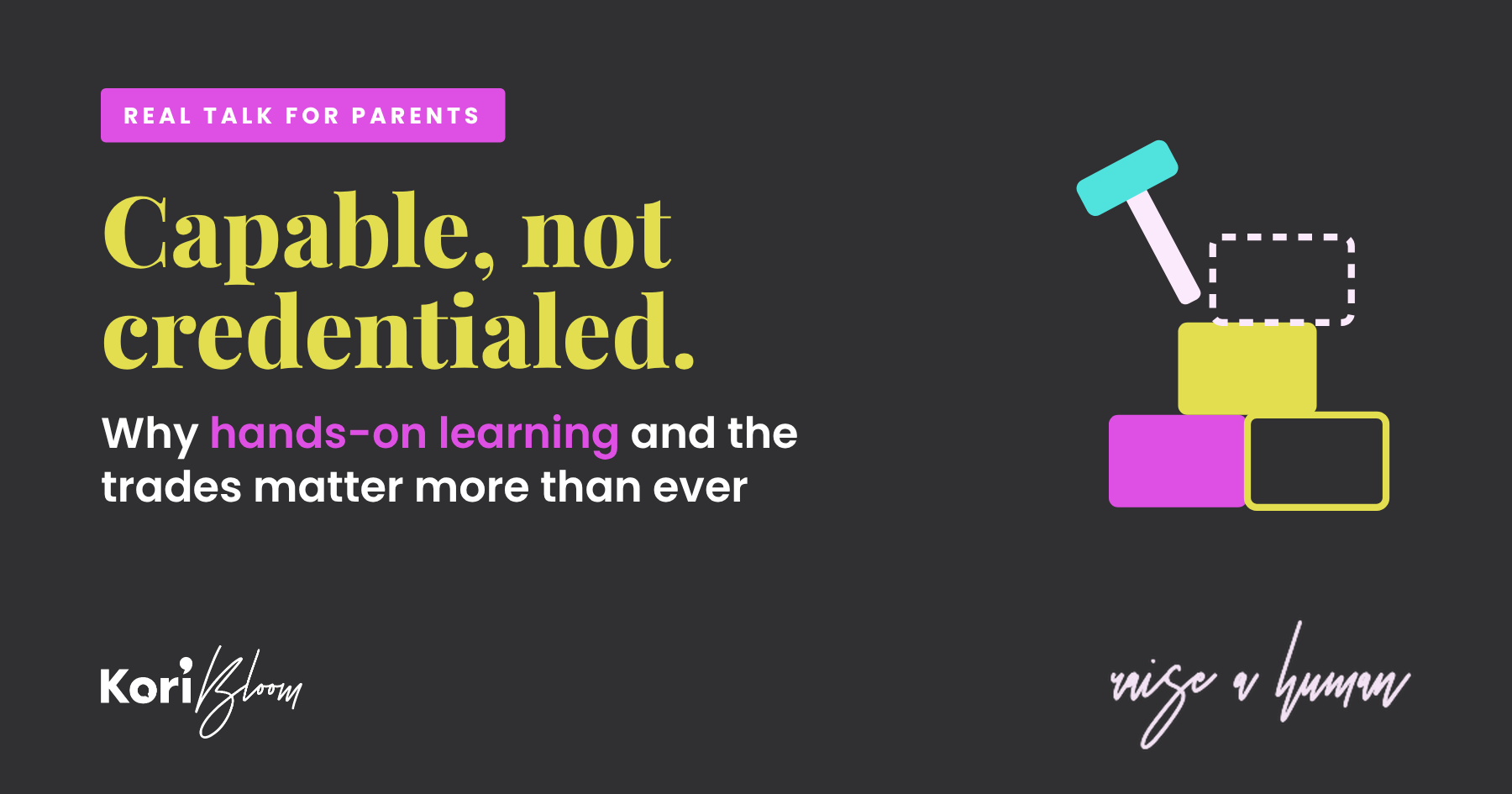
Here’s the short version: emotional intelligence and confidence don’t come from a classroom. They come from doing real things, in the real world, with real people, and learning what works. The conversation we should be having with our kids isn’t “where will you go to college” — it’s “what kind of life do you want to build, and what skills will get you there?”
Table of Contents
Why hands-on learning for kids matters more than we admit
Kids who only ever sit in classrooms become adults who only know how to sit in classrooms. Kids who get to build, fix, plant, cook, repair, and make are getting a different education — one that includes patience, problem-solving, failure tolerance, and the satisfaction of finishing something with their own hands.
This isn’t anti-college. It’s pro-whole-person. The most capable adults I’ve met — including some of the leaders I coach — combine both. They can think AND make. They can communicate AND build. They didn’t learn that in any single track.
What hands-on learning actually teaches
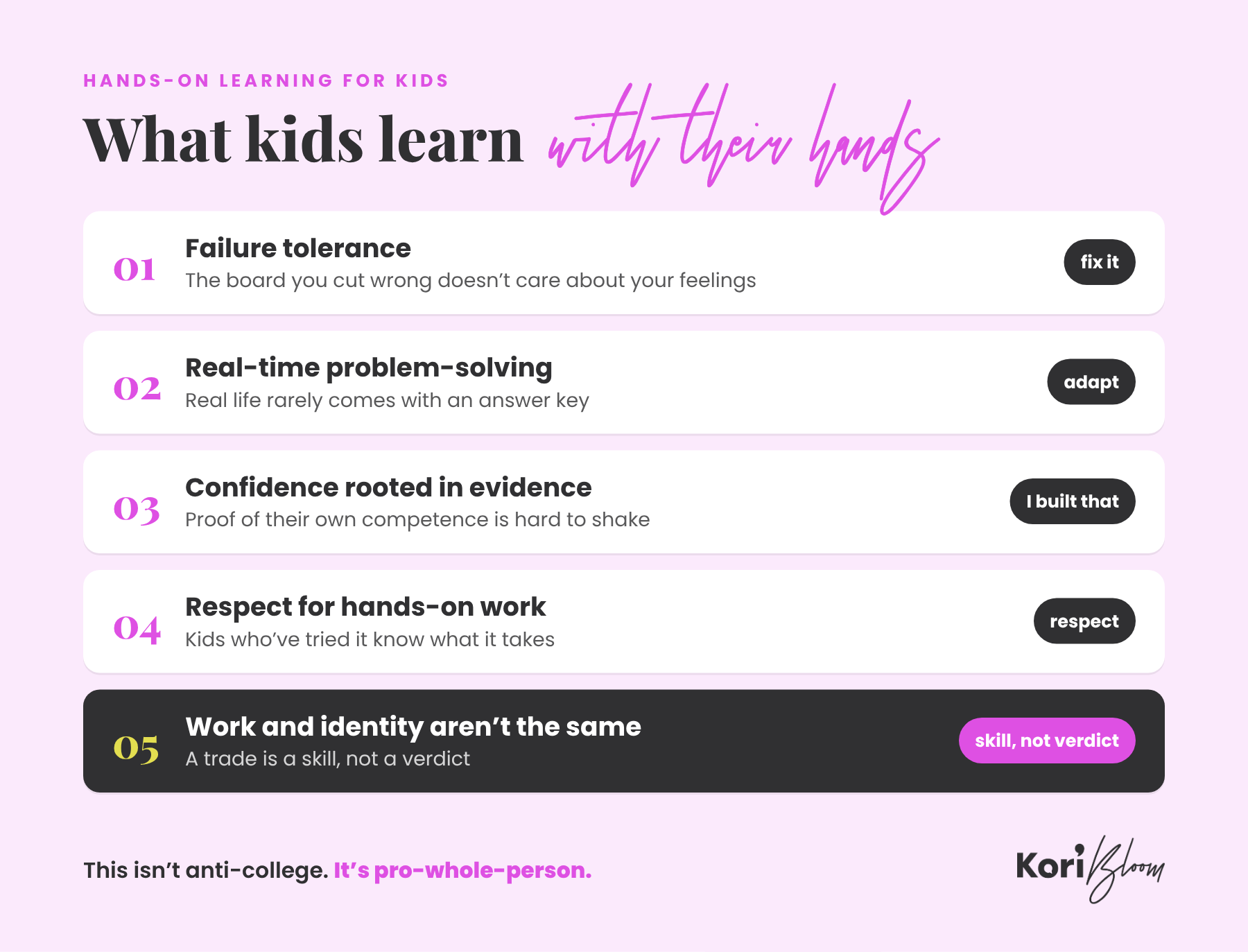
- Failure tolerance. The board you cut wrong doesn’t care about your feelings. You fix it, or you start over. Both are useful lessons.
- Real-time problem-solving. A textbook problem usually has a clear answer. Real life often doesn’t. Hands-on learning teaches kids to adapt, troubleshoot, and keep moving forward.
- Confidence rooted in evidence. Kids who’ve built things have proof of their own competence. That kind of confidence is hard to shake.
- Respect for people who work with their hands. A kid who’s tried it knows what it takes — and grows up to be a better customer, neighbor, and leader.
- An understanding that work and identity aren’t the same thing. A trade is a skill, not a verdict.
Three things every parent can do this month
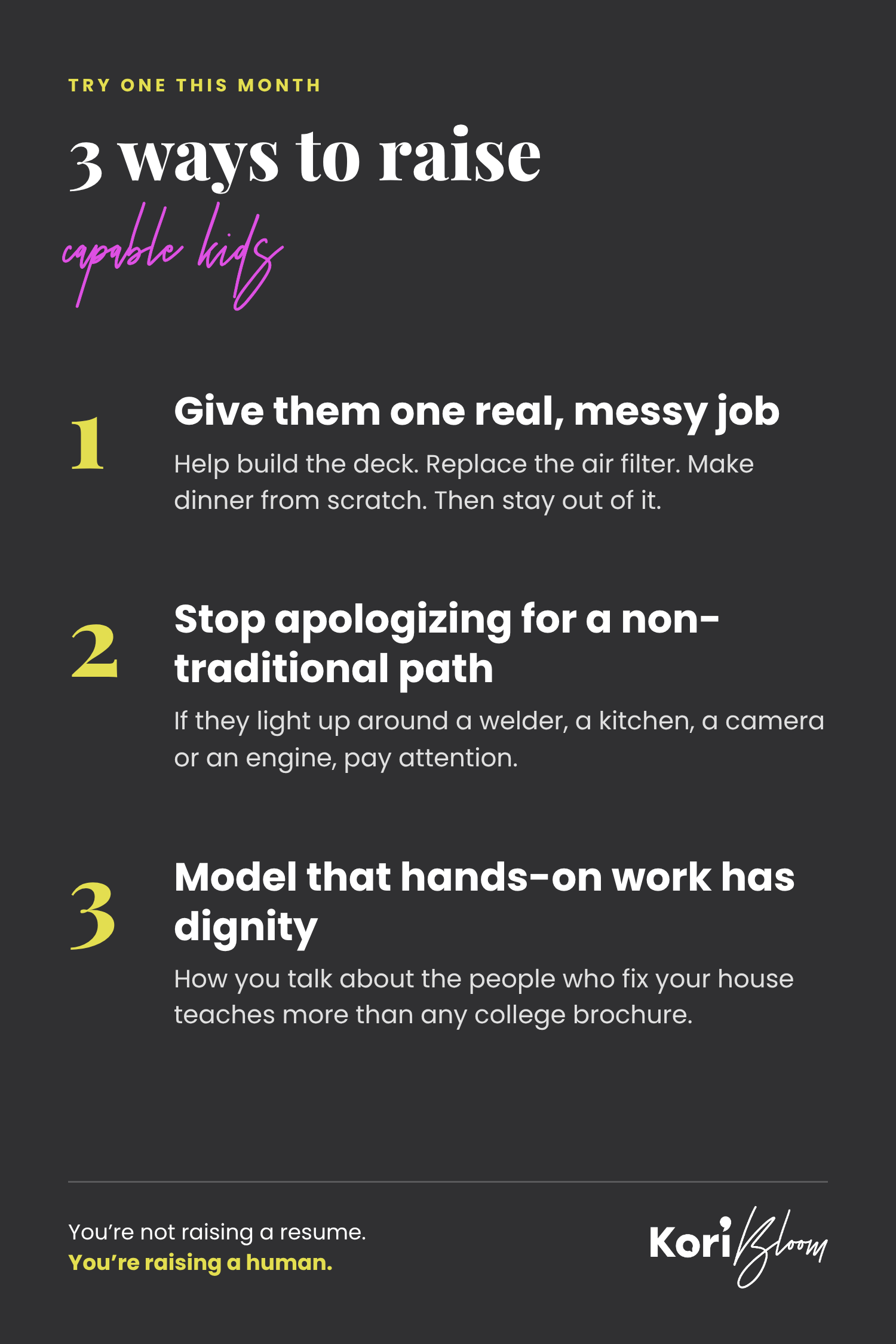
1. Give them one real, messy job
Not a chore from a chart. A real job. Help build the deck. Replace the air filter. Make dinner from scratch. Fix the gate. Something with real stakes and real consequences. Then stay out of it. (It’s the same muscle we build in raising resilient kids: let them struggle a little.) They’ll figure most of it out. You’ll be amazed.
2. Stop apologizing when they choose a non-traditional path
If your kid lights up around a welder, a kitchen, a camera, a guitar, an engine — pay attention. The path you walked may not be theirs. The world needs every kind of skilled human, and your job is not to deliver them to a path. It’s to help them find the one they belong on.
3. Model that hands-on work has dignity
Your kids are watching how you talk about the people who fix your house, deliver your food, build your business’ office space. The respect you show those people teaches your kids more about what kind of work is honorable than any college brochure ever will.
The deeper move: whole-person, not narrow-path
This is the heart of whole-person leadership applied to parenting. You’re not raising a resume. You’re raising a human. Humans need to think and feel and make and lead. The more of those they get to practice — in school, in the garage, at the kitchen counter, on a team — the more capable they become.
Better, not perfect. Capable, not credentialed. That’s the goal.

Frequently Asked Questions
Why is hands-on learning important for kids?
Hands-on learning builds failure tolerance, real-time problem-solving, and confidence rooted in evidence. Kids who have built, fixed, or made real things have proof of their own competence, and that kind of confidence is hard to shake.
Are the trades a good path for my child?
For many kids, yes. This isn’t anti-college. It’s pro-whole-person. If your child lights up around a welder, a kitchen, a camera, or an engine, pay attention. Your job isn’t to deliver them to a path; it’s to help them find the one they belong on.
How can I give my kids more hands-on learning at home?
Give them one real, messy job with real stakes: help build the deck, replace the air filter, or make dinner from scratch. Then stay out of it. They’ll figure most of it out.
How do I teach my kids that hands-on work has dignity?
Model it. Your kids are watching how you talk about the people who fix your house, deliver your food, and build your office space. The respect you show those people teaches more than any college brochure.
Get the scripts for the parenting conversations that matter
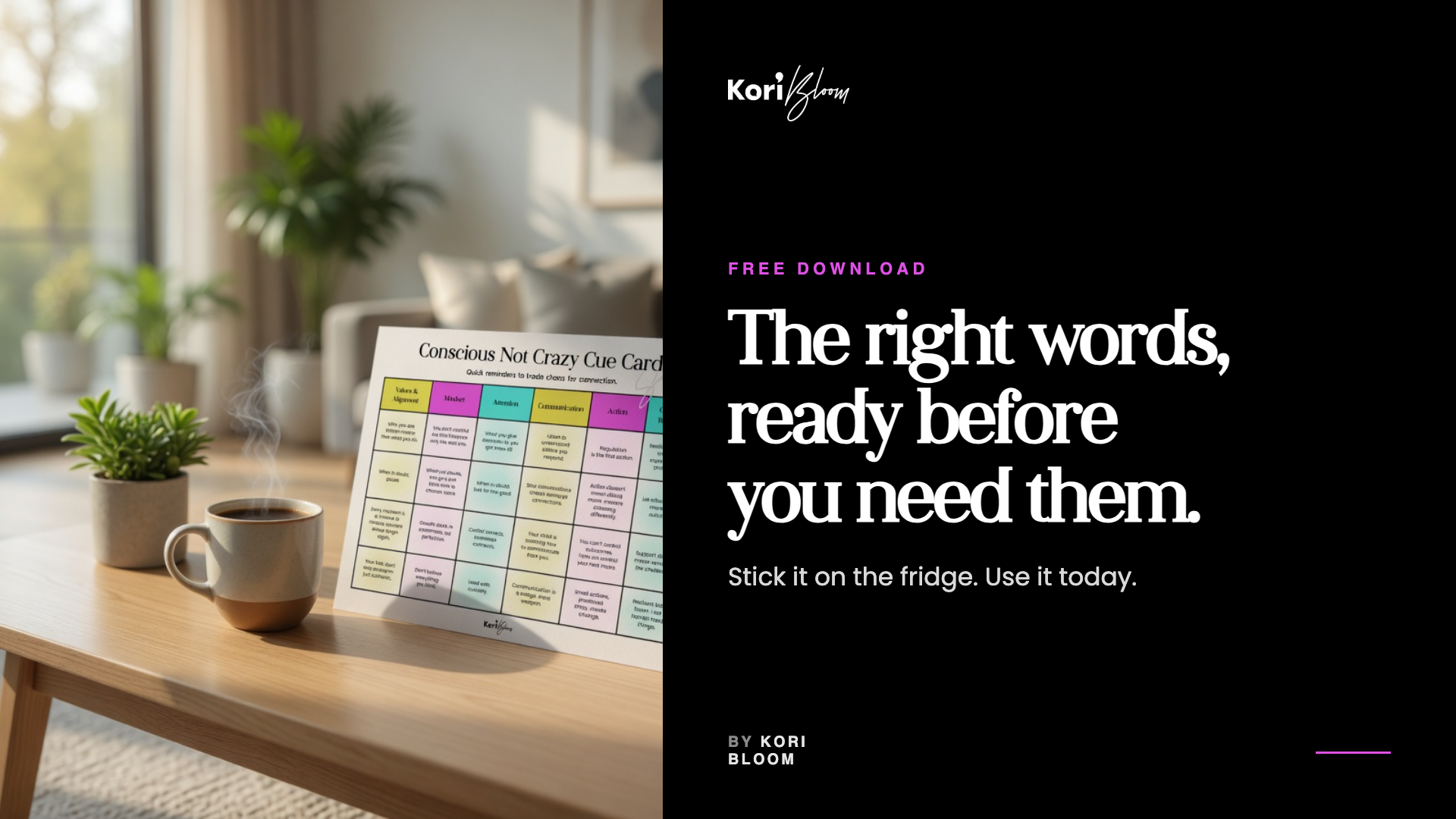
The CNC Cue Cards are a free, downloadable set of scripts for the everyday parenting moments that shape what your kids believe about themselves. Download them at koribloom.com/cue-cards.
The Conscious Not Crazy 6-week parenting course walks you through raising capable, confident, emotionally intelligent kids. Learn more at koribloom.com/conscious-not-crazy.
Listen to the full conversation with Brice Dawson and Skylor Alexander on the Conscious Not Crazy podcast.
About Kori Bloom
Kori Bloom Lauritsen is a keynote speaker, author of The Business of Parenting, and creator of the Conscious Not Crazy parenting course. She helps growth-minded leaders and parents communicate with composure, alignment, and intention — in every room. Learn more at koribloom.com.