

Teachers are leaders. Not just in their classrooms, but in every relationship they navigate.
And here's the thing: We don't become different people when we leave the classroom.
The way we communicate, respond to challenges, build relationships, and manage our emotions follows us everywhere.
That's why I believe the best professional development goes beyond teaching strategies. It helps teachers grow as people, because when we grow as people, we grow as educators.
This post is for principals, superintendents and anyone who plans PD days and in-service. Here's what I've learned about professional development that sticks, what I bring to a school, and one simple thing your teachers can try this week.
Table of Contents
My teaching career began in a high school art classroom. I've also taught elementary school, and years later, I found myself teaching in an experiential learning environment with children ranging from age two through sixth grade.
I've worked in public and private education, including Reggio Emilia-inspired environments, IB curriculum and transdisciplinary learning. Those experiences shaped how I think about teaching, learning and leadership.
Children learn from what we model, not just what we tell them.
That lesson applies to every relationship, inside the classroom and out.
Teaching has always been about more than delivering lessons.
It's about building relationships, encouraging curiosity, navigating different personalities, communicating with families, and creating an environment where students feel safe enough to learn and grow.
Add technology, changing expectations, and the everyday dynamics of a classroom, and it's clear that teachers rely on far more than academic knowledge.
They rely on human skills. And those skills deserve just as much attention as the curriculum.
What Makes Professional Development for Teachers Stick
In my most recent teaching role, in an experiential learning environment, professional development looked very different. We often modeled the same learning environment we wanted to create for our students. It was engaging, fun and intentional, with themes or specific areas of focus based on what we needed at the time.
The culture was one of learning for everyone, not just the students. We shared ideas, struggles and strategies. We addressed challenges and faced things head-on. Professional development wasn't something separate from our work. It was part of how we grew together.
Information alone doesn't create change. Professional development for teachers sticks when it's relevant to real life. It helps teachers navigate the challenges they face every day, gives them something they can actually use, and makes them feel supported and seen. Research agrees: the Learning Policy Institute's review of effective teacher professional development found that PD that changes practice includes active learning, collaboration, time for reflection and support over time.
Inspiration matters. And when we combine it with fresh perspectives, practical strategies, and simple tools teachers can use immediately, that's when learning becomes action.
Because in the middle of a challenging student interaction, a conversation with a frustrated parent, or a difficult moment with a colleague, simplicity matters. You don't have time to recall a complicated framework. You need something you can remember and use right then and there.
If teachers leave with one simple tool they can remember and use when things get difficult, that's a win.
What I Bring to Your School's Professional Development
I don't come into a school to tell teachers how to teach. I come to give them tools that help them lead themselves, strengthen relationships, and navigate the moments that matter—inside and outside the classroom.
We dive into self-leadership: Lead Yourself First™. Because if we can't lead ourselves, how can we effectively lead anyone else?
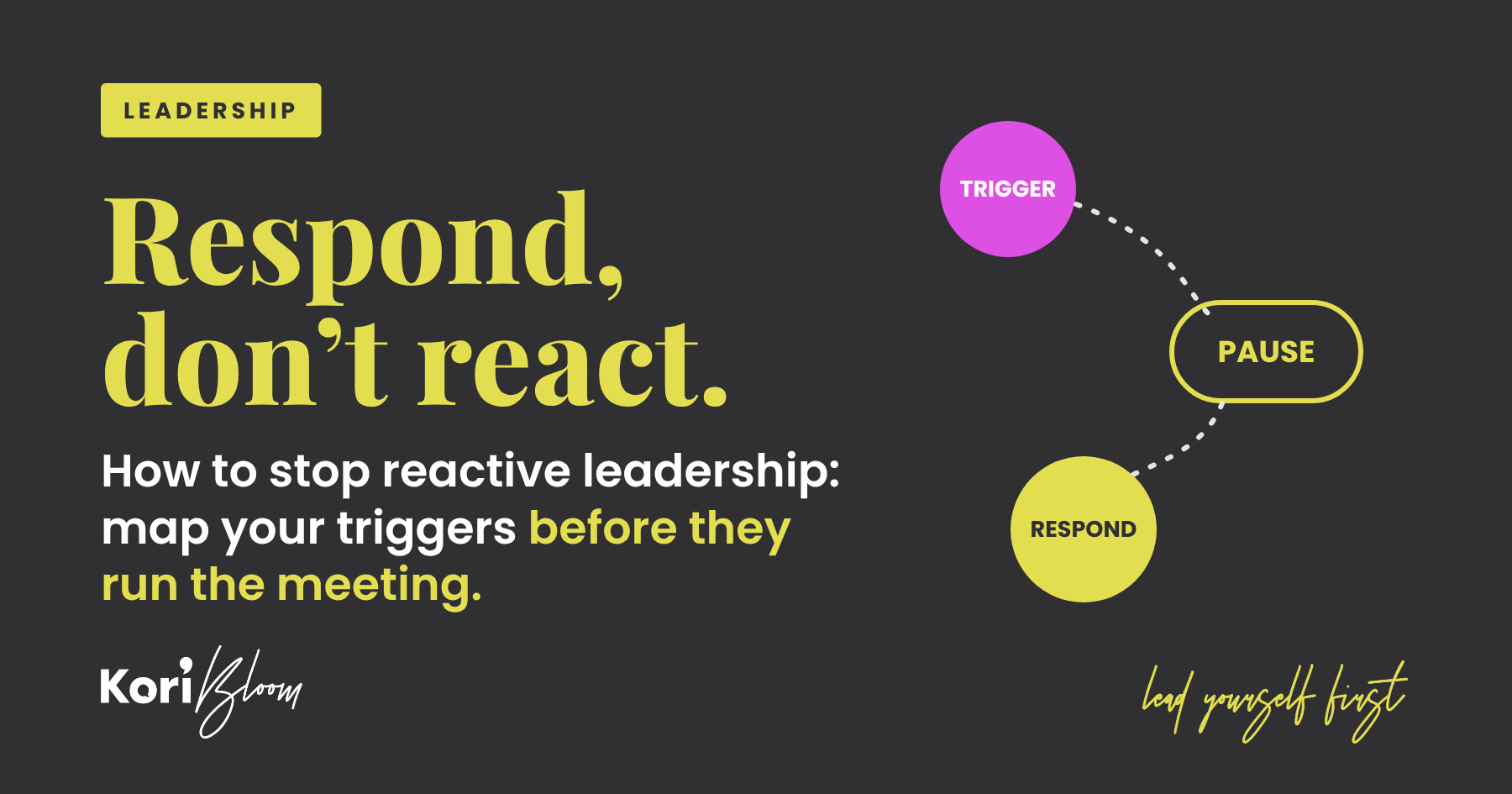
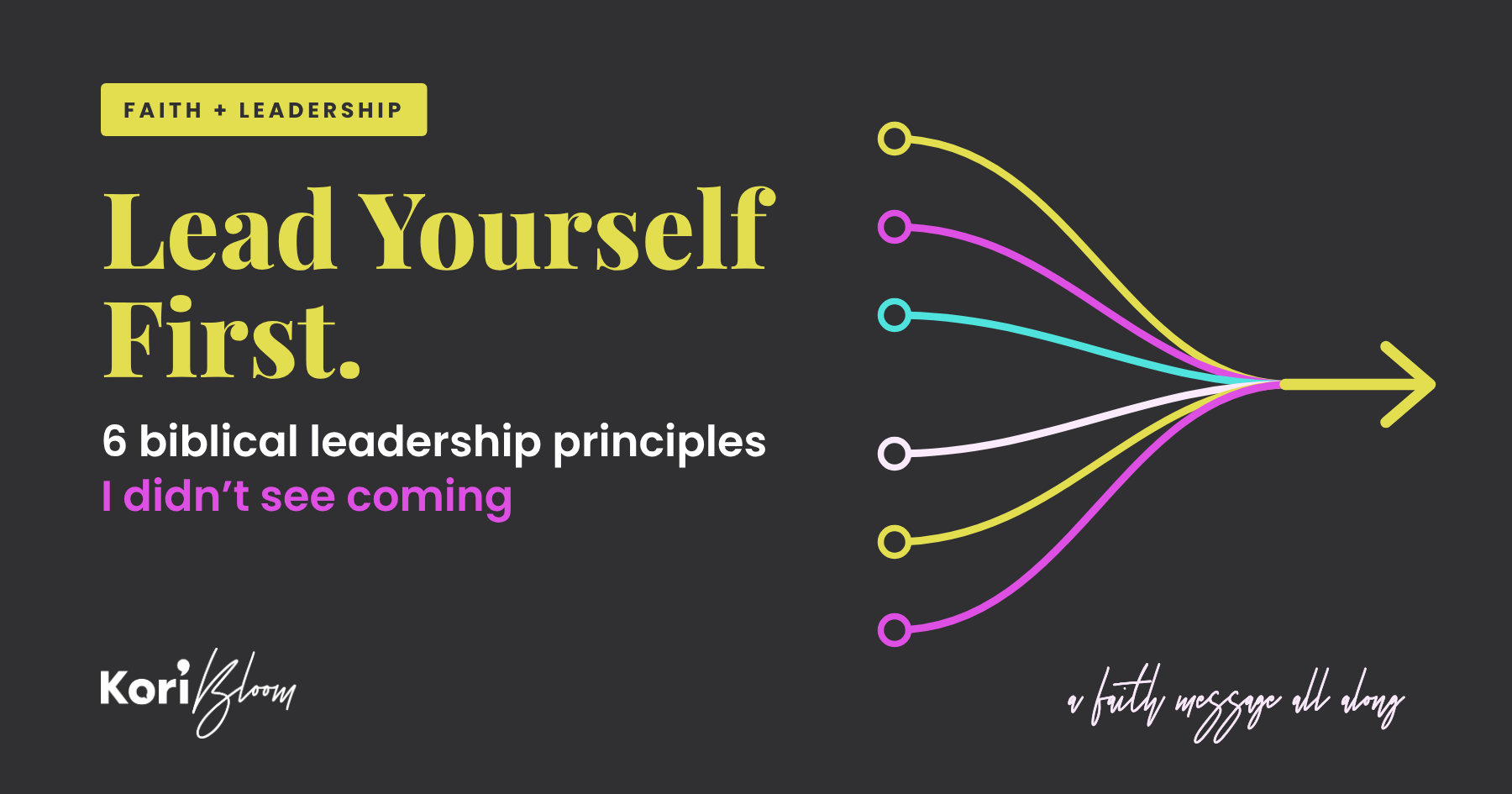
I use my Six Threads framework to explore the difference between reactive and intentional leadership. We talk about the power of assuming the best in our students, getting curious instead of jumping to conclusions, and responding without shame or judgment. (If you want to go deeper on that difference, I break it down in How to Stop Reactive Leadership.)
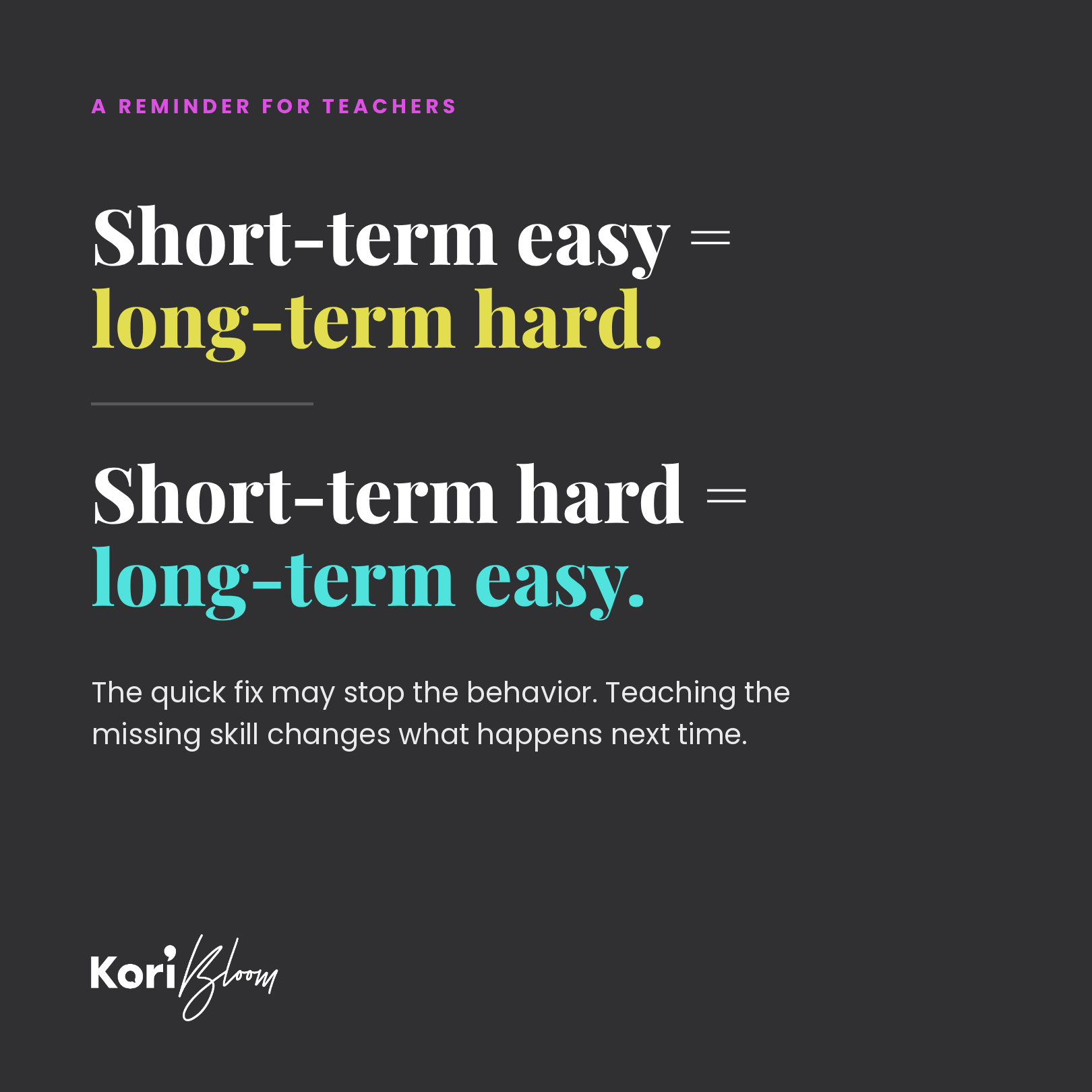
We also explore critical thinking, intrinsic motivation, and why teaching skills creates more meaningful, long-term change than relying on punishment, shame or fear. One of my favorite reminders:
Short-term easy = long-term hard. Short-term hard = long-term easy.
Sometimes the quick fix stops a behavior in the moment, but it doesn't teach the missing skill the child needs to do something different next time.
The Six Threads
My Six Threads framework is the foundation of every session:
- Values & Alignment
- Mindset
- Attention
- Communication
- Action
- Growth & Resilience
Simple Tools Teachers Can Use Tomorrow
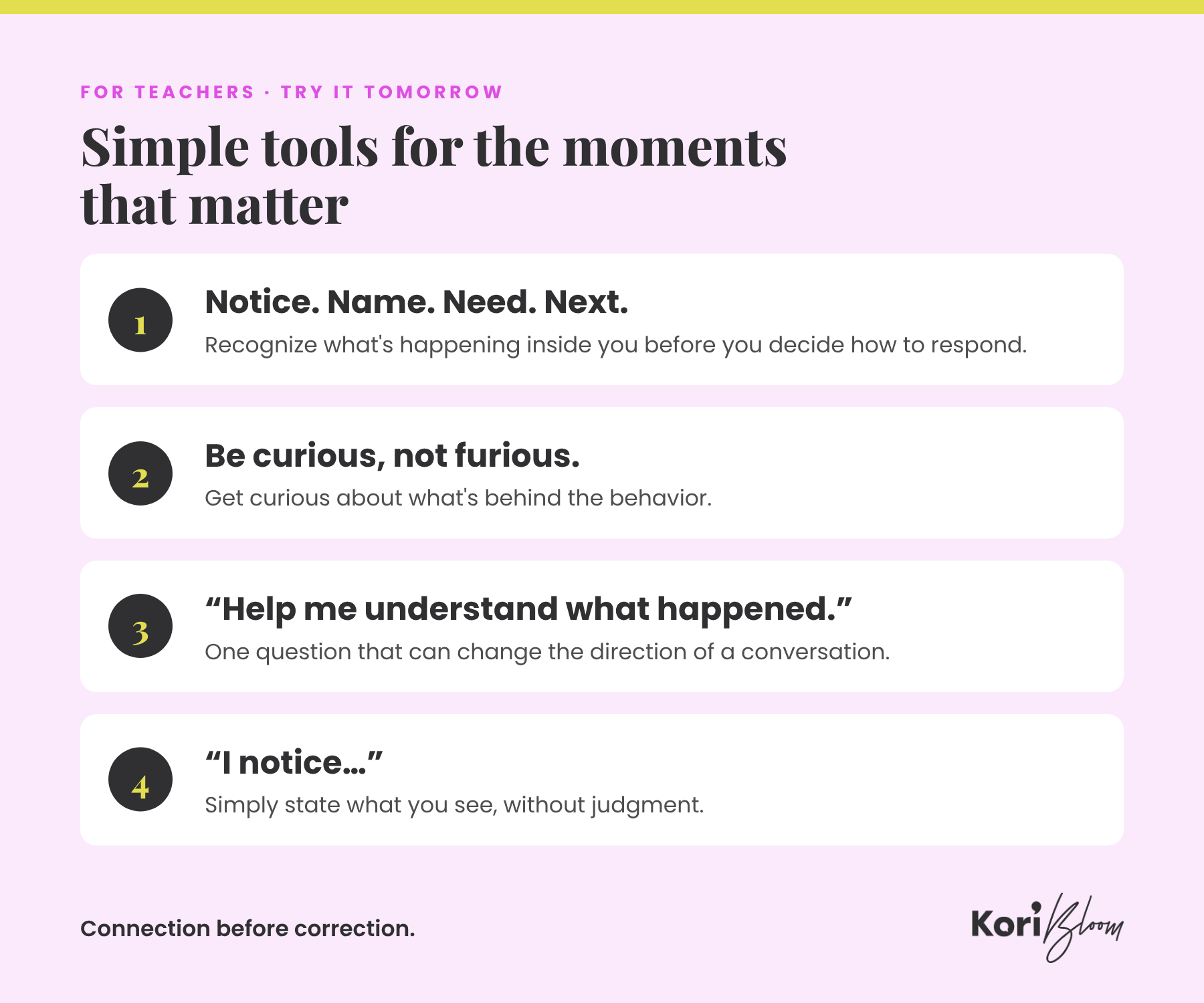
- Notice. Name. Need. Next. A simple tool that helps us recognize what's happening internally before deciding how to respond.
- Be curious, not furious. Instead of reacting to a child's behavior, get curious about what's behind it.
- "Help me understand what happened." One simple question that can completely change the direction of a conversation.
- "I notice..." Simply state what you see. Notice the behavior without judgment.
For Teachers, Administrators and Team Leads
The foundation is the same for everyone, because we're all human, and leadership starts with how we lead ourselves.
For teachers, I focus more on navigating challenging student behavior, managing emotional triggers, and building relationships with students, parents and colleagues. Connection before correction. The tools also support teachers in their relationships outside of school.
For administrators and team leads, we apply those same principles to staff leadership, communication, accountability, culture and navigating difficult conversations.
Formats Built Around Your School
I'm happy to customize the experience based on your school's needs, challenges and desired outcomes. I've delivered everything from one-hour keynotes, to three- and four-hour professional development sessions, to a six-part series focusing on one thread per session.
The format, content and level of interaction can be tailored to the size of your school, your audience, and what your leadership team wants participants to walk away with. Whether a session qualifies for PD hours depends on your school's or district's requirements.
And the learning doesn't have to end when I leave. My online course, Conscious Not Crazy, can provide ongoing support for both parents and educators.
The discussions are always some of my favorite moments. You can see the shift when people realize the challenges they're facing aren't unique to them. They're not the only ones struggling with a particular behavior, conversation or relationship.
When I share my own experiences, including the times I haven't gotten it right, people connect. That's when the room opens up, the conversations get real, and people begin learning from each other.
Kori has a gift for using her skills and knowledge, coupled with her personal stories and vulnerability, to inspire any parent or teacher to make positive change. Kori demonstrates her passion for helping others experience their best selves on a daily basis.
Brianne Bongiovanni, Founder/Principal, Bambini Creativi
Questions to Ask Before You Book a PD Speaker
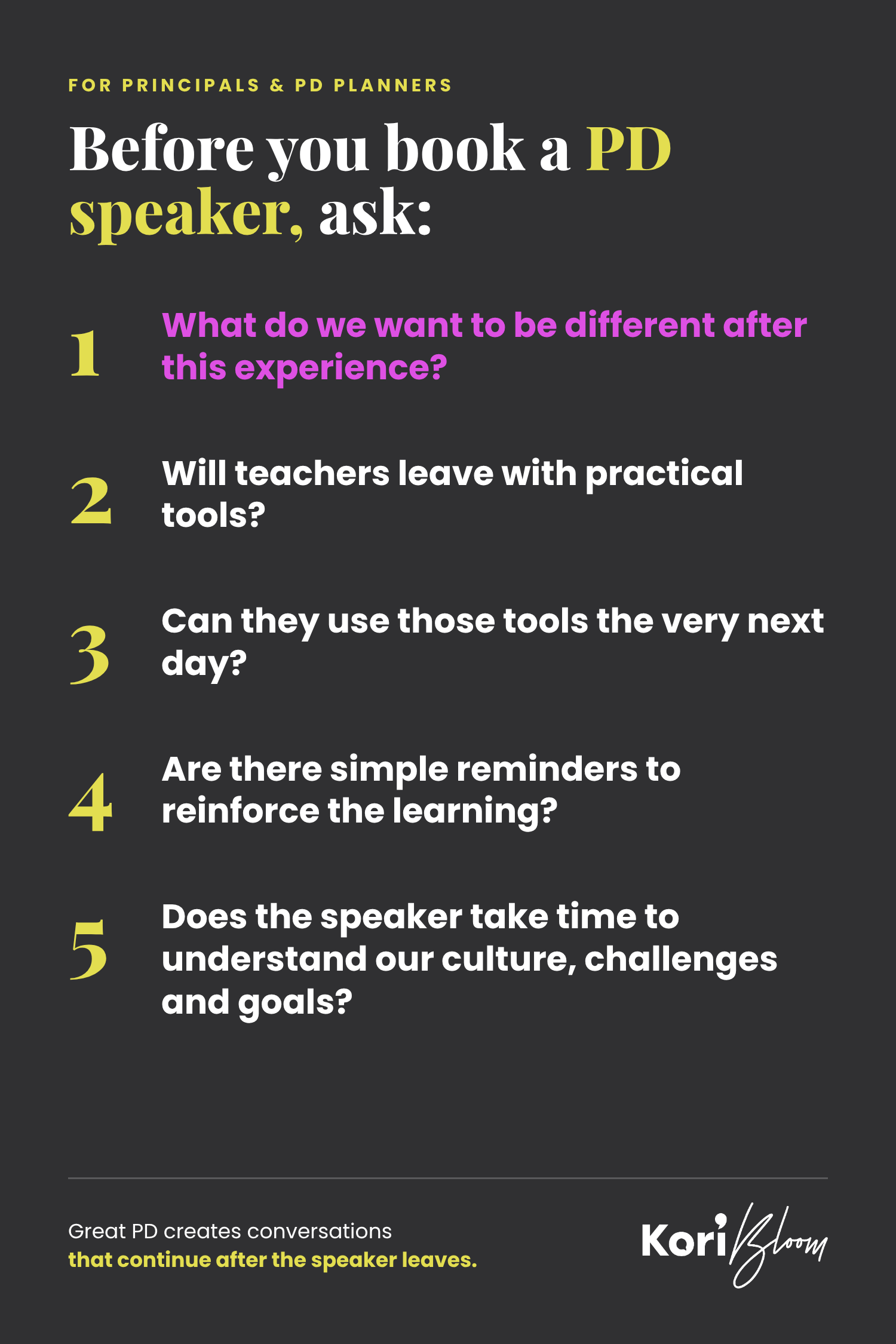
One of the most important questions a principal can ask is: "What do we want to be different after this experience?" Not just what do we want teachers to learn, but what do we want them to be able to do differently? From there, ask:
- Will teachers leave with practical tools?
- Can they use those tools the very next day?
- Are there simple reminders or resources to help reinforce the learning?
- Does the speaker take the time to understand our school's culture, challenges and goals?
Great professional development creates conversations and tools that continue long after the speaker leaves. For more on finding the right fit, see my guide to hiring a keynote speaker.
What I teach applies everywhere, because we're talking about human behavior and relationships. Teachers are often parents themselves. They navigate relationships with students, their own children, colleagues, spouses and families.
That's also why I support parent education. When parents and teachers are aligned in their approach, everyone benefits, especially the child. (For the parent side of this work, start with these intentional parenting shifts.)
One thing to try this week:
Assume the best. Be curious, not furious. Challenge yourself to flip the negative thought and look for what's good.
For example, a child grabs something from another child. Instead of immediately reacting or assuming the child is being disrespectful, get curious: "Oh, did you want to use that?"
Now you've opened the door to understanding what happened and coaching the missing skill. You can teach the child how to ask, wait, take turns or communicate what they need. The goal isn't just to stop the behavior. It's to teach the missing skill.
Who you are matters more than what you do.
When we invest in the person behind the profession, the impact reaches far beyond the classroom.
It shows up in how teachers connect with students, collaborate with colleagues, communicate with families, and lead their own lives.
That's the kind of professional development I believe in. Learning that doesn't end when the session does.
Bring Kori to Your School
If you're looking for a professional development speaker for schools who gives your staff simple, practical tools they can use the very next day, with students, with parents and with each other, I'd love to hear about your team and your goals.
Frequently Asked Questions
What should schools look for in professional development for teachers?
Start with what you want to be different after the session. Look for professional development that leaves teachers with practical tools they can use the next day, offers simple reminders to reinforce the learning, and takes time to understand your school's culture, challenges and goals.
What makes professional development for teachers stick?
PD sticks when it's relevant to real life, gives teachers something simple they can use in the moment, and makes them feel supported and seen. If teachers leave with one tool they can remember when things get difficult, that's a win.
What does Kori teach in school PD sessions?
Kori focuses on self-leadership through Lead Yourself First and her Six Threads framework: Values & Alignment, Mindset, Attention, Communication, Action, and Growth & Resilience. Teachers practice simple tools like Notice. Name. Need. Next. and "Be curious, not furious."
What PD formats does Kori offer for schools?
Sessions are customized to each school, from one-hour keynotes to three- and four-hour professional development sessions to a six-part series with one thread per session. Whether a session qualifies for PD hours depends on the school's or district's requirements.
Are sessions different for teachers and administrators?
The foundation is the same, because leadership starts with how we lead ourselves. Teacher sessions focus on student behavior, emotional triggers and relationships, while sessions for administrators and team leads apply the same principles to staff leadership, communication, accountability and culture.